TL;DR (Quick Answer)
The role of AI in education is to personalize learning, save teachers’ time, and give students help anytime. It powers AI tutors, automated grading, and smart content tools. It also helps find learning problems early.
What Is the Role of AI in Education?
The role of AI in education is to support learning, teaching, and school management with smart software. AI studies student data. It then adjusts lessons, gives feedback, and handles routine tasks. AI does not replace the classroom. It works like an assistant. The teacher still leads.
As a computer science teacher, I see this daily. Students use AI most for quick explanations and practice questions. The best results come when I guide them on how to use it.
What Are the 10 Main Roles of AI in Education?
Here are 10 common roles of AI in education.
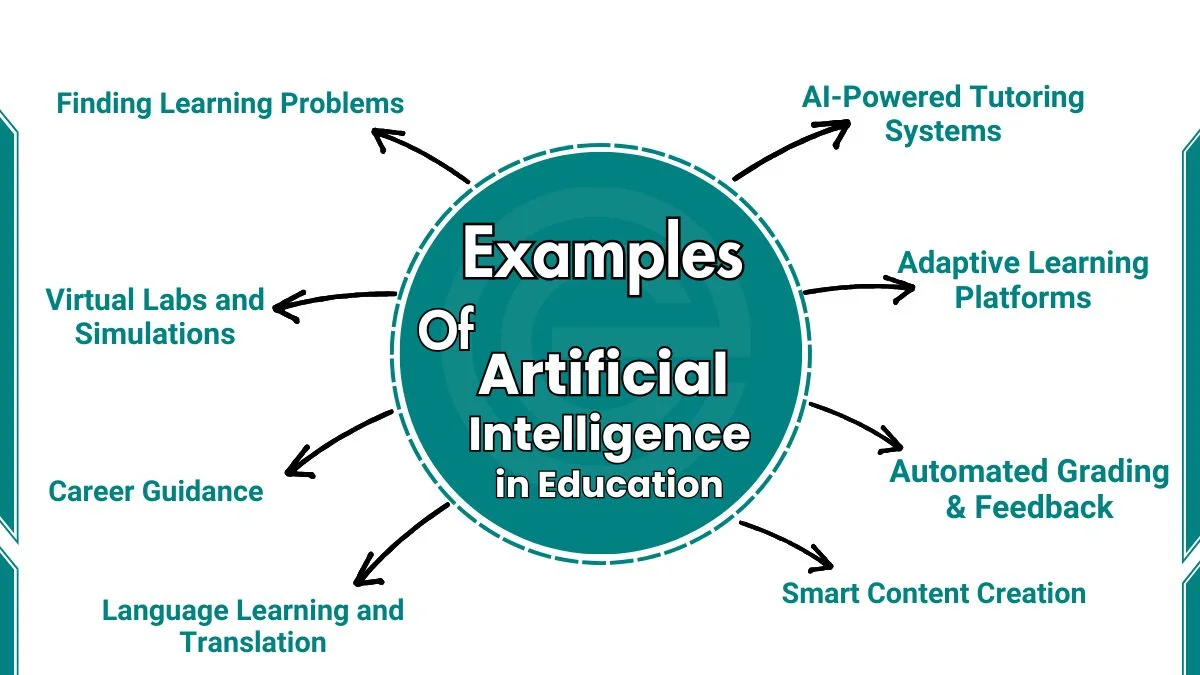
1. Adaptive Learning Platforms Personalize Education
AI creates custom learning plans for each student. It notices which topics you find easy or hard. Then it changes the lesson to match your level.
This is done by adaptive learning platforms that adjust lessons in real time. If you make mistakes in math, it gives similar practice problems. When you do well, it makes questions harder. Each student learns at their own pace.
2. AI Help with Automated Grading and Feedback?
AI can grade multiple-choice tests instantly. Some advanced tools also check essays. They look at grammar, facts, and structure.
Students get results quickly, with helpful comments. Automated feedback loops let them fix mistakes the same day. Teachers save time and can focus on teaching. Still, a teacher should review important grades. AI can make mistakes.
3. Intelligent Tutoring Systems in Education
Many students need help late at night. AI tutors are available 24 hours a day. They answer homework questions anytime.
Intelligent tutoring systems (ITS) use machine learning models to explain hard concepts in simple steps. Students in remote areas benefit most. They do not need to wait for a teacher.
4. AI Chatbots in Education
AI chatbots answer student questions in plain language. They explain topics, give examples, and quiz students. Schools also use them to answer admission and fee questions.
Chatbots use natural language processing (NLP) and generative AI to understand questions and reply in plain language. They also give instant, formative feedback. Chatbots work best as a first helper. They can sound confident even when they are wrong.
In the 2026 Instructure survey, 69% of parents and 65% of higher education students said they worry about this. So students should always check important answers in their textbooks.
5. Education-Specific AI Platforms Different from Generic AI Chatbots
Generic chatbots like ChatGPT answer almost any question. They are not built for classrooms. Education-specific AI platforms are different. Khanmigo is one example.
These platforms follow a curriculum. They guide students step by step instead of giving the final answer. A tool built for learning is safer than a general chatbot. It also supports real learning, not just quick answers.
6. AI Help in Smart Content Creation
AI makes study material fast. It turns long chapters into short summaries. It creates quizzes from your notes. Some tools make flashcards for quick revision.
In the UK, 76% of teachers who use AI rely on it to create lesson plans, worksheets, and learning resources (Bett UK, 2026). Teachers should still check the facts before sharing.
7. Language Learning and Translation
AI helps students learn languages faster. Apps like Duolingo use AI to adapt lessons. Some tools correct pronunciation in real time.
AI also translates texts instantly. Students can practice conversations with AI partners. It is like a language lab in your pocket.
8. Support Career Guidance and Course Selection
AI studies a student’s skills and interests. It then suggests suitable careers and courses. Many universities use it for admission guidance.
This helps students make better choices. It matters because job postings that need AI skills grew 144% year over year as of April 2026.
9. Virtual Labs and Simulations
AI builds safe lab environments. Students can practice chemistry without real chemicals. Simulations look and work like real labs.
Simulations also reduce cognitive load. Students focus on the idea, not the setup. Schools also save money on costly equipment.
10. AI Helps Find Learning Problems Early
Some students learn differently but do not know why. AI tracks how they read, write, and solve problems. It can spot early signs of learning difficulty.
Teachers see this in learning analytics dashboards. These show progress and weak areas at a glance. Teachers can then give help sooner.
AI also supports students with special needs. Speech recognition and text-to-speech accessibility tools help many learners. Still, AI only flags a pattern. A trained teacher or specialist must make the final call.
What Is the Role of AI in Modern Education in 2026?
The role of AI in modern education is now mainstream. Recent surveys show how fast it has grown:
- 95% of UK undergraduates use AI in some way. 94% use generative AI for assessed work (HEPI Student Generative AI Survey, 2026).
- The Digital Education Council surveyed over 45,000 people in 35 countries. Almost 90% of students and 77% of faculty use AI (2026).
- 80% of UK teachers now use AI in their work (Bett UK report, 2026).
- 45% of K-12 educators say they have had no formal AI training (Instructure survey, 2026).
The message is clear. Use is high. Training and clear rules are still behind.
What Is the Human-in-the-Loop Model in AI Education?
Human-in-the-loop means a person checks and approves AI decisions. AI suggests. The teacher decides.
For example, AI can flag a student who is falling behind. The teacher then talks to that student and plans support. AI can draft a quiz. The teacher checks it before use.
This model reduces errors and algorithmic bias. It also keeps learning human. In my own classes, I treat AI as a helper, not a judge.
How Does AI Reduce Teacher Workload and Support Exam Proctoring?
AI handles admin work. It tracks attendance, organizes schedules, and prepares reports. Teachers get more time for creative lessons and personal attention.
AI also watches online exams for cheating signs, like unusual eye movement. This keeps remote exams fair. However, proctoring tools raise privacy concerns. Schools must use them with clear rules.
One honest note: only 35% of UK teachers who use AI say they work fewer hours. Over half say it eased their workload (Bett UK, 2026). AI helps, but it is not magic.
What Are the Risks and Challenges of AI in Education?
AI has real risks. Schools and students should know them.
- Wrong answers. AI can sound sure and still be wrong.
- Data privacy. Student data must be stored safely.
- Algorithmic bias. AI can treat some groups unfairly if its training data is biased.
- Cheating. 57% of students say they lack clear guidance on AI use in assessments (Digital Education Council, 2026).
- Over-reliance. 22% of students say working without AI is now harder (Digital Education Council, 2026).
- Digital divide. Students without internet or devices may fall behind. Text-to-speech tools and offline resources can help close this gap.
The fix is simple. Use AI with clear school rules, teacher guidance, and human review.
FAQs
Will AI replace teachers in the future?
No. Research reviews show AI is not a substitute for teachers. Teachers stay important as guides and supporters of learning. They understand feelings and give life advice that AI cannot.
Is my data safe with AI school tools?
Good schools use AI systems that protect student information. Always check the privacy rules before using any tool.
What is the role of AI chatbots in education?
AI chatbots answer questions, explain topics, and quiz students at any hour. They work best as a first helper. Students should still verify important answers.
Is using AI for homework cheating?
It depends on your school’s rules. Using AI to learn is usually fine. Copying AI answers as your own work is cheating. Always ask your teacher first.