10 Examples of Information Technology in Everyday Life
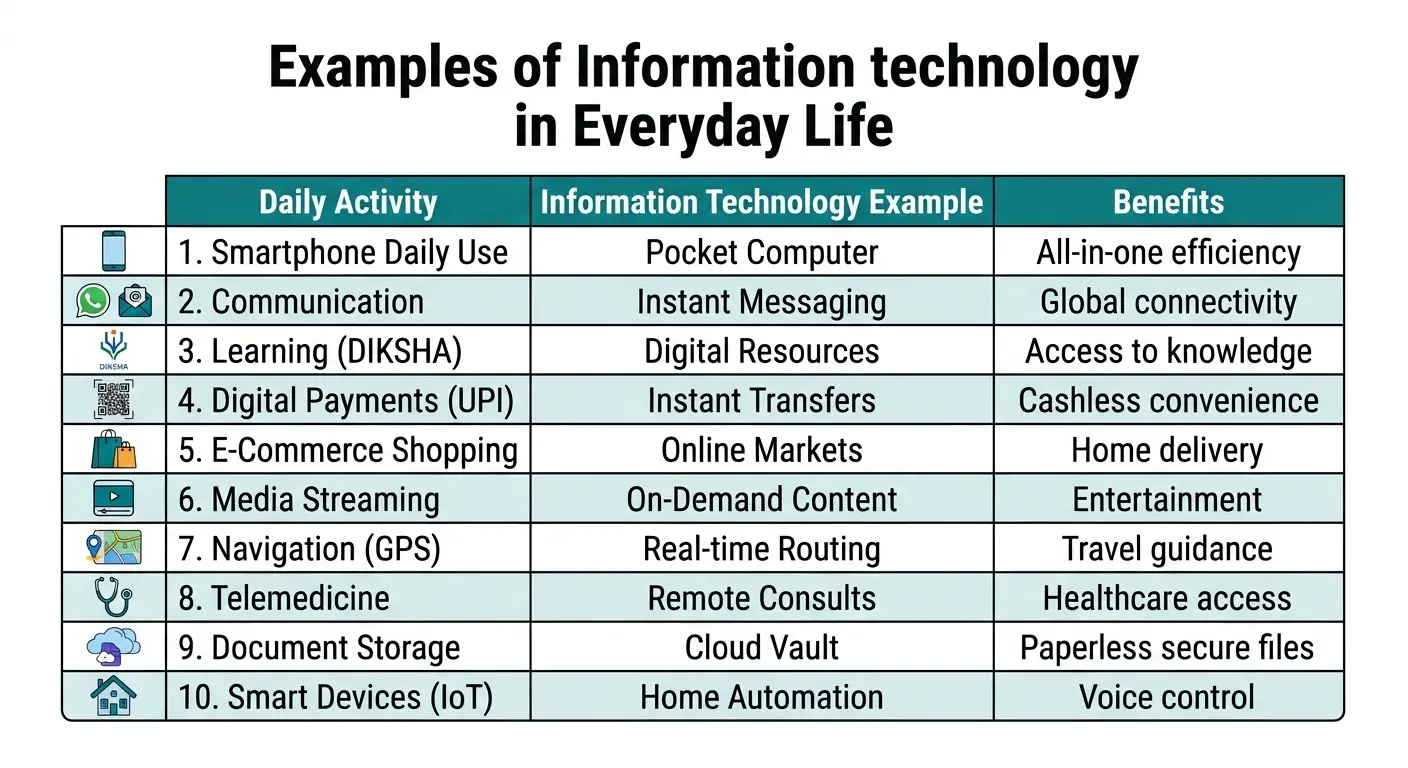
image showing 10 Examples of Information Technology in everyday life

TL;DR (Quick Answer): Examples of Information Technology include smartphones, WhatsApp messaging, UPI digital payments, online learning platforms like DIKSHA, and cloud apps like DigiLocker. You wake up and switch off your phone alarm. You check WhatsApp. You pay for tea with a UPI QR scan. You have used information technology three times before breakfast. Information … Read more
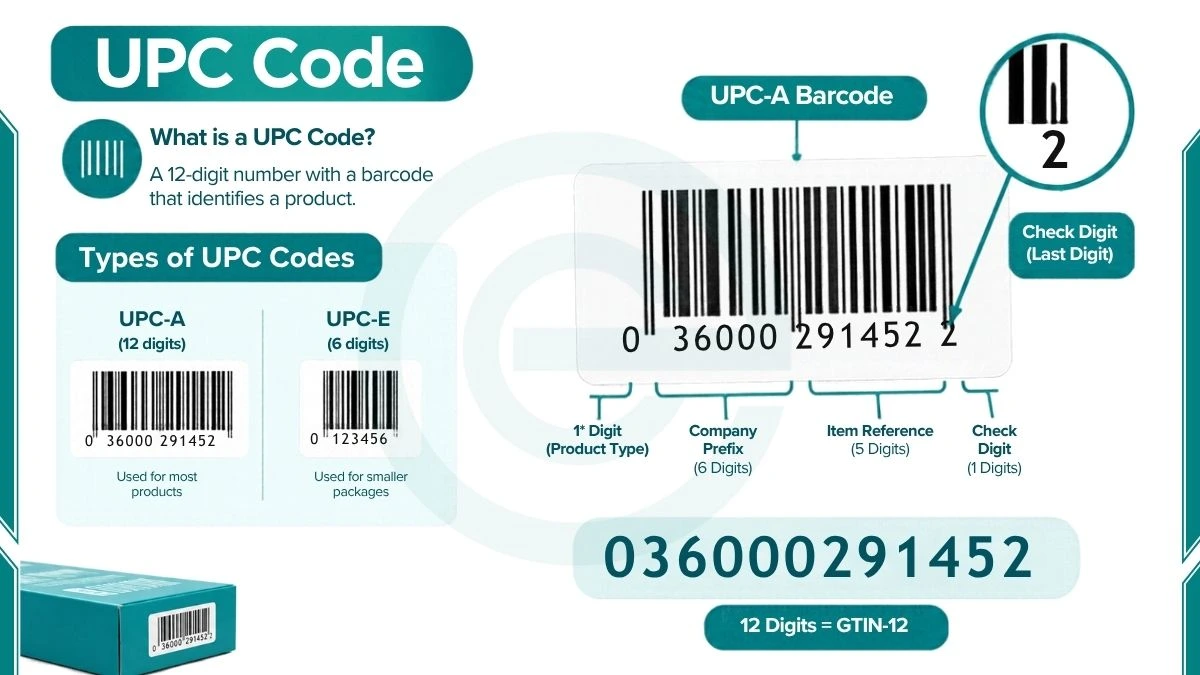
What Is UPC Code – Meaning, Structure, and How It Works

image showing UPC Code

TL;DR:UPC stands for Universal Product Code. A UPC code is a 12-digit number with a barcode that identifies a product in a store. Stores use it to track items, and GS1 manages the system. What Is a UPC Code? A UPC is a unique product number printed as a barcode. The barcode has black bars … Read more

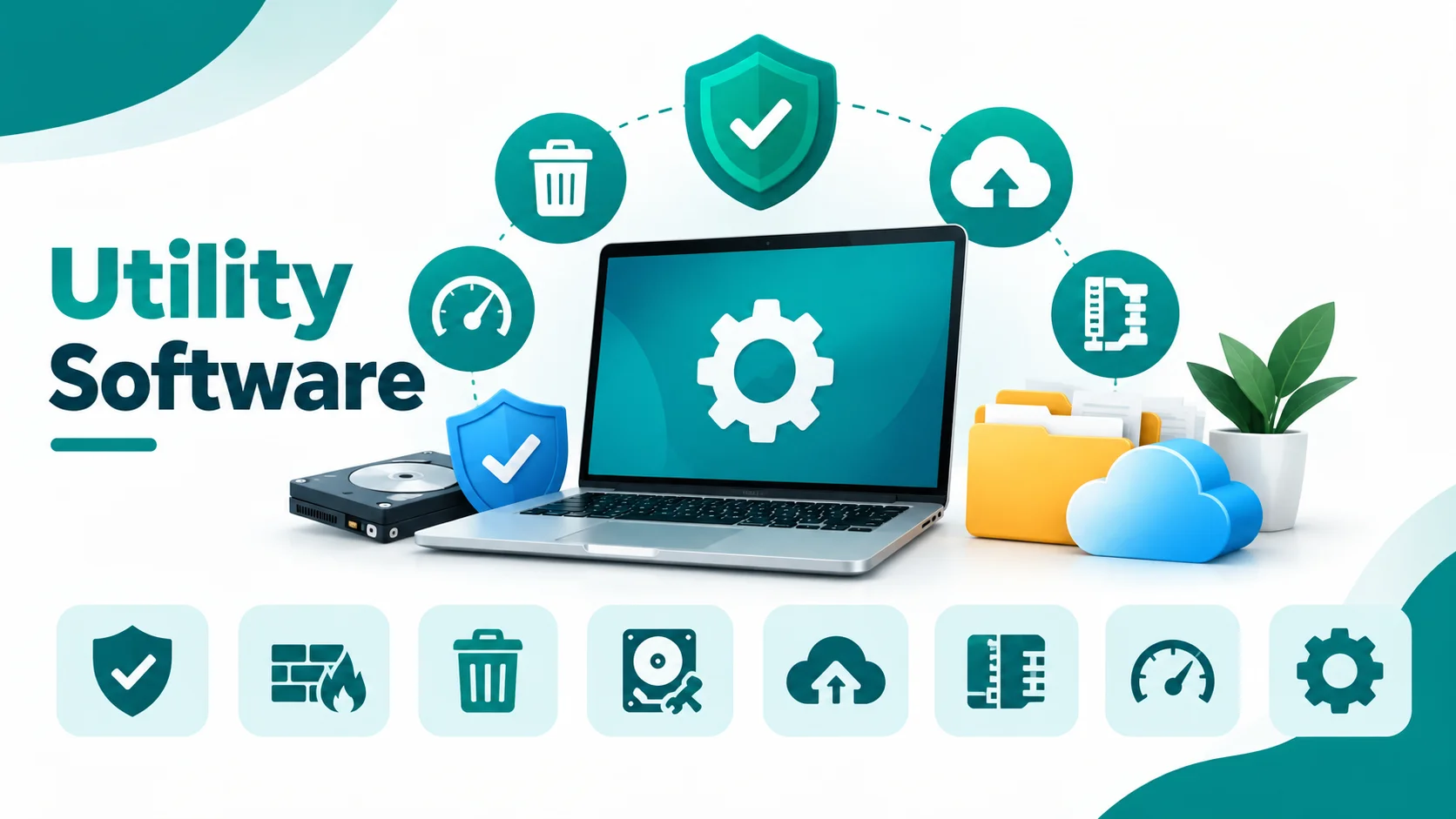
What Is Utility Software? Types, Functions, and Examples

image showing utility software

TL;DR (Quick Answer)Utility software is a type of system software. It helps maintain, protect and manage a computer. Application software helps you do tasks, such as writing documents or playing games. Utility software works in the background. It scans for viruses, compresses files, backs up data and cleans the disk. What Is Utility Software in … Read more

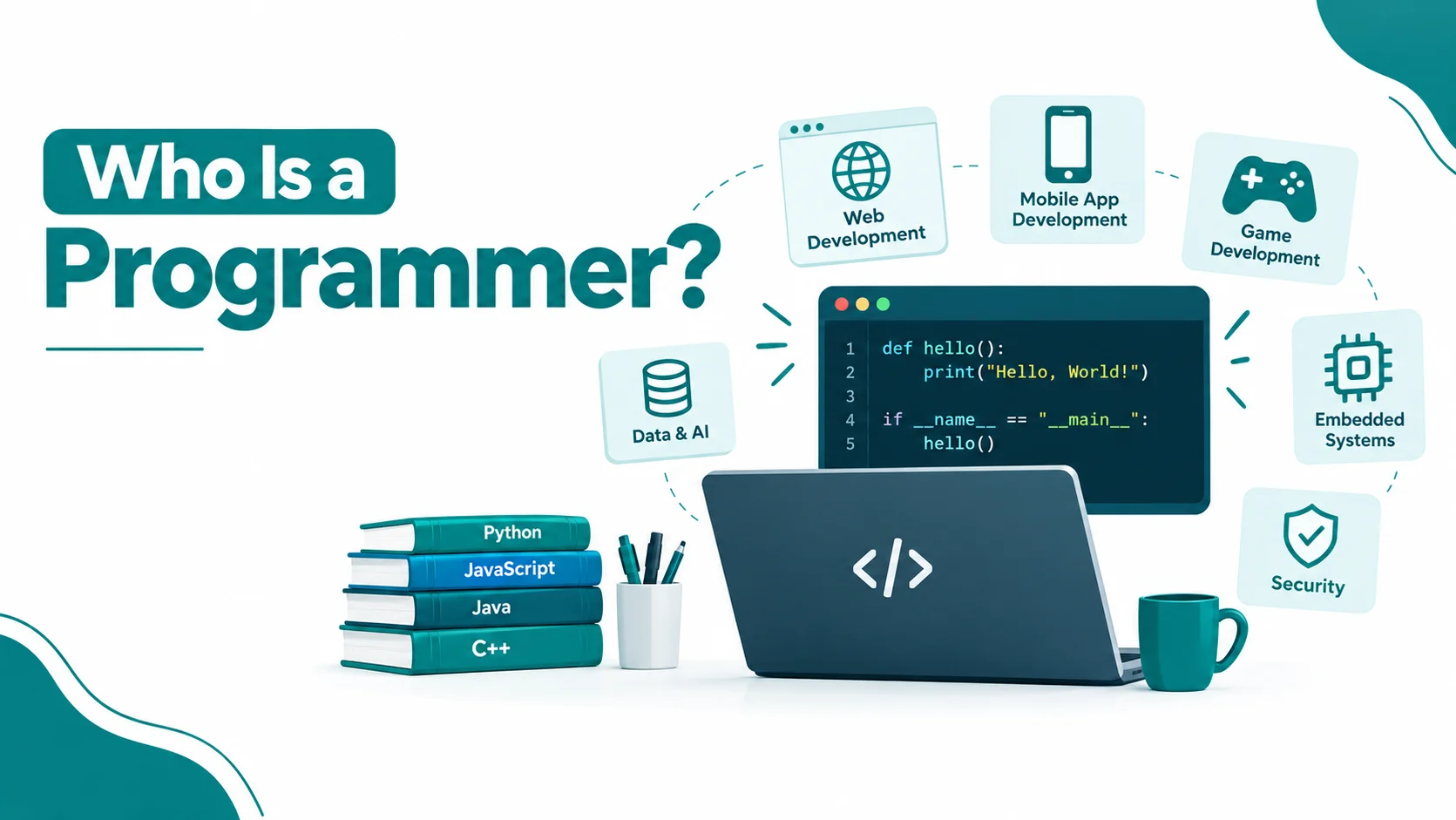
Who Is a Programmer? – Definition, Skills, Types and Myths

featured image of who is computer programmer

Quick Answer: A programmer is a professional who writes, tests, and maintains code to build software, websites, mobile apps, and video games. A programmer is a person who writes, tests, and fixes code. Code is a set of instructions that tells a computer what to do. Every app on your phone, every website, and every … Read more

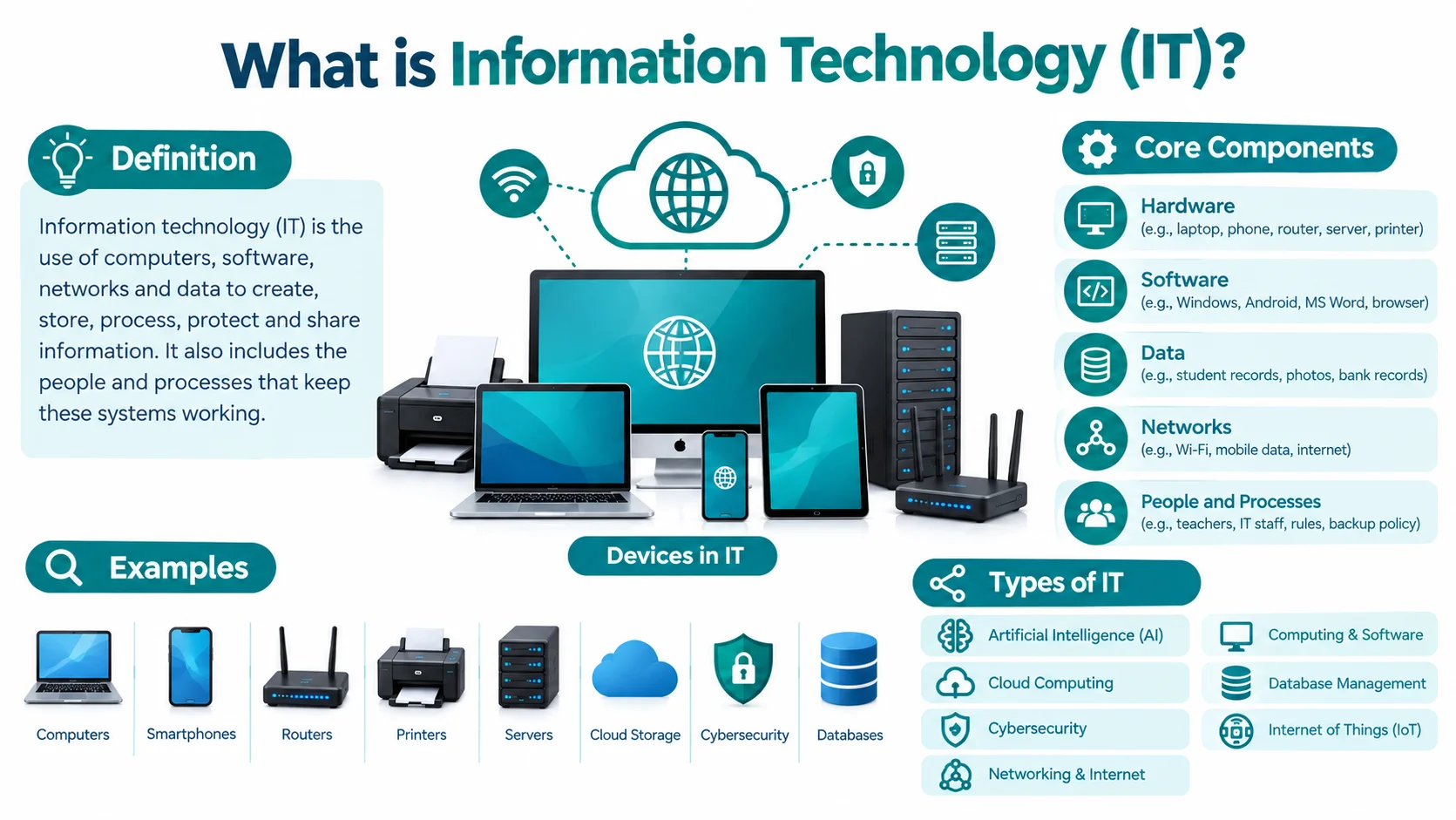
Information Technology? Definition, Components, Types, and Examples

featured image of Information technology

TL;DR: Information technology (IT) is the use of computers, software, networks and data to create, store, process, protect and share information. It has five core components: hardware, software, data, networks, and people and processes. What Is Information Technology (IT)? Information technology is the use of computers, storage devices, networks, and software to create, process, store, … Read more

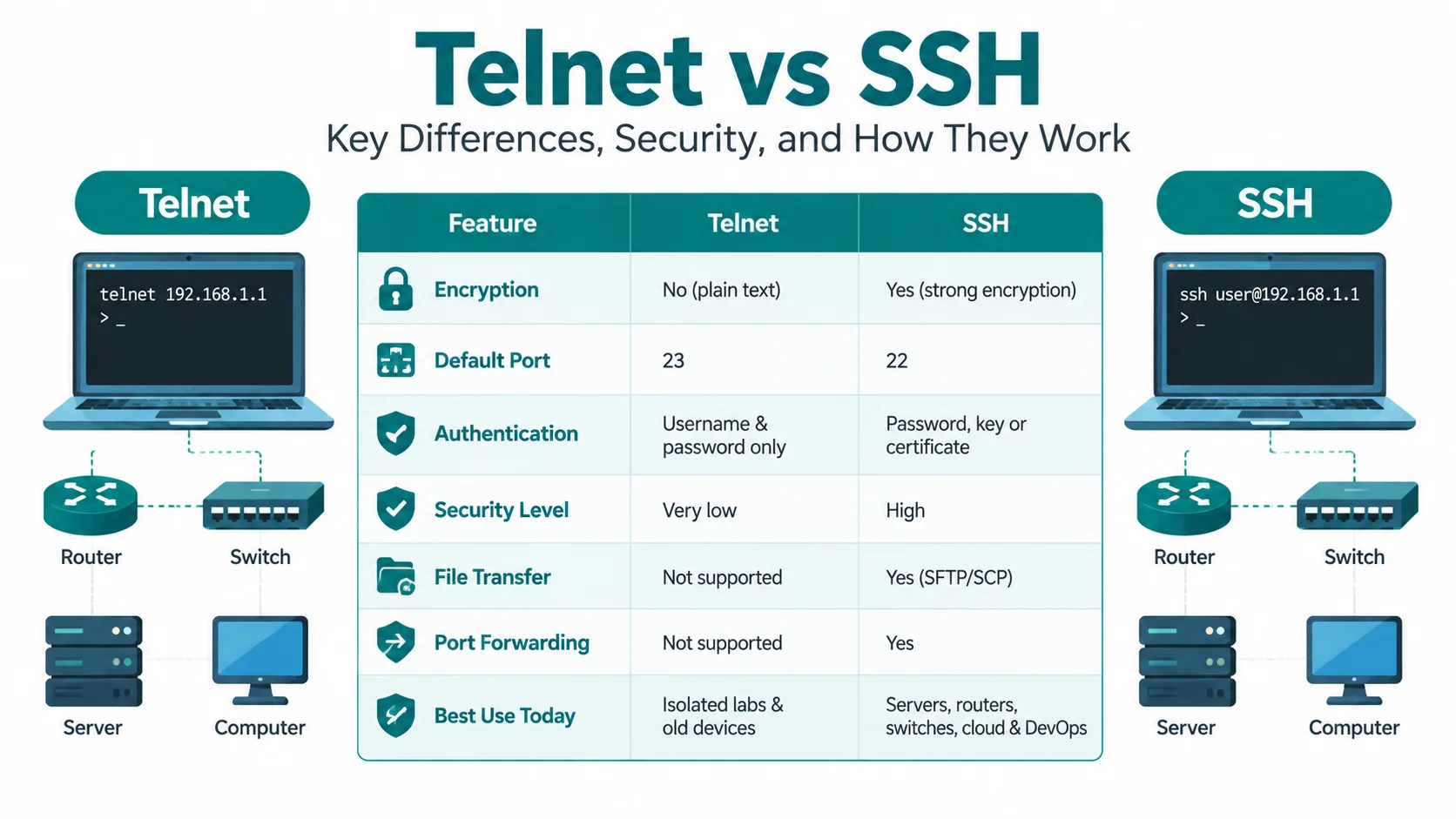
Telnet vs SSH – Differences, Ports, and Security Explained

image showing Telnet vs SSH comparison

Quick Answer: Telnet is an old remote access tool that uses port 23 and sends all data in plain text, so anyone on the network can read your password. SSH uses port 22 and encrypts everything. Use SSH-2 for all real work. Keep Telnet only for isolated labs or old devices. Telnet and SSH both … Read more

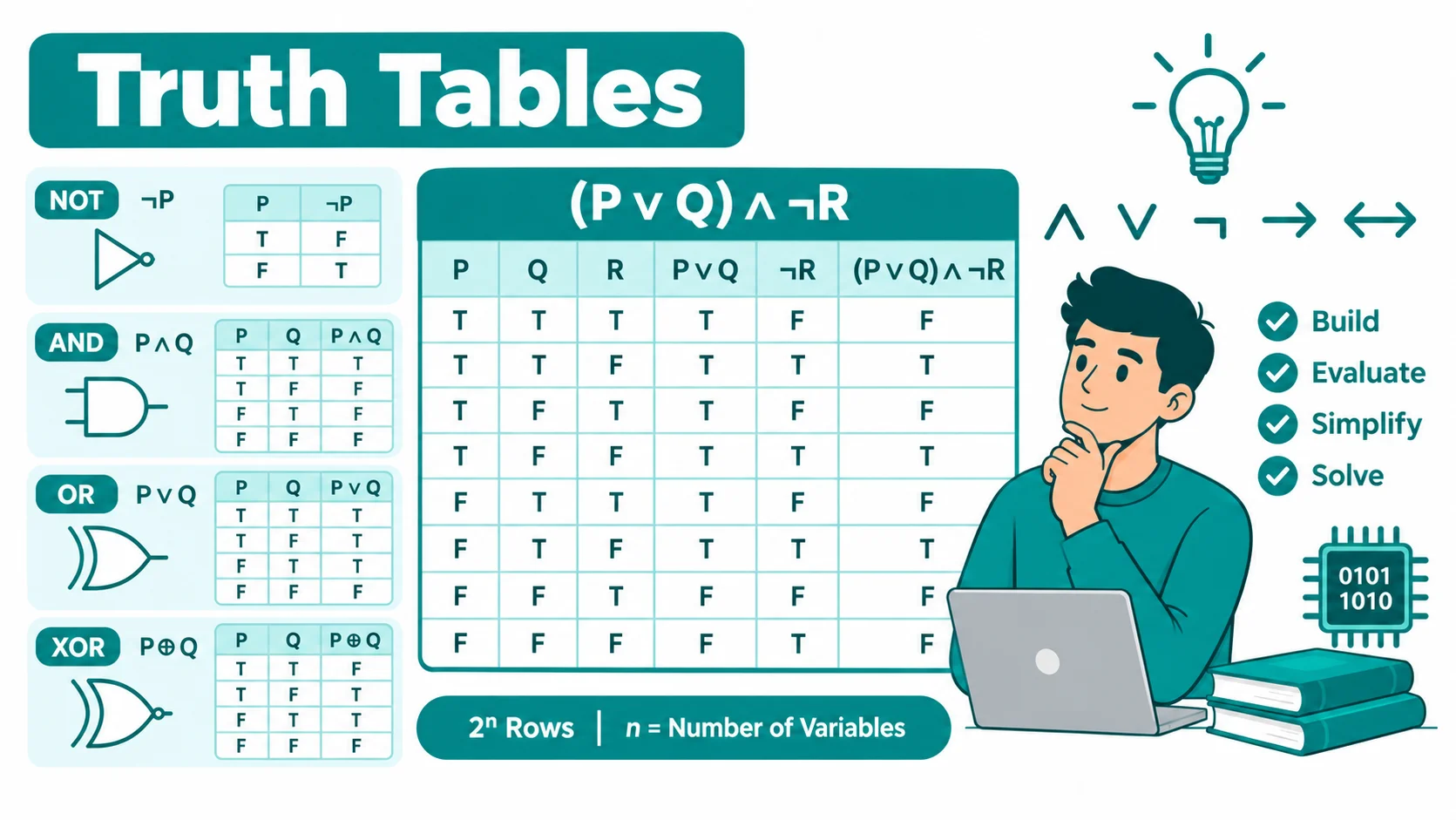
How to Create and Evaluate Truth Tables in Logical Expressions

image showing truth table detail

TL;DR A truth table lists every possible True/False input for a logical expression and shows the output for each case. The table needs 2^n rows, where n is the number of different variables, so 2 variables give 4 rows and 3 variables give 8 rows. You build it in small steps: list the variables, fill … Read more

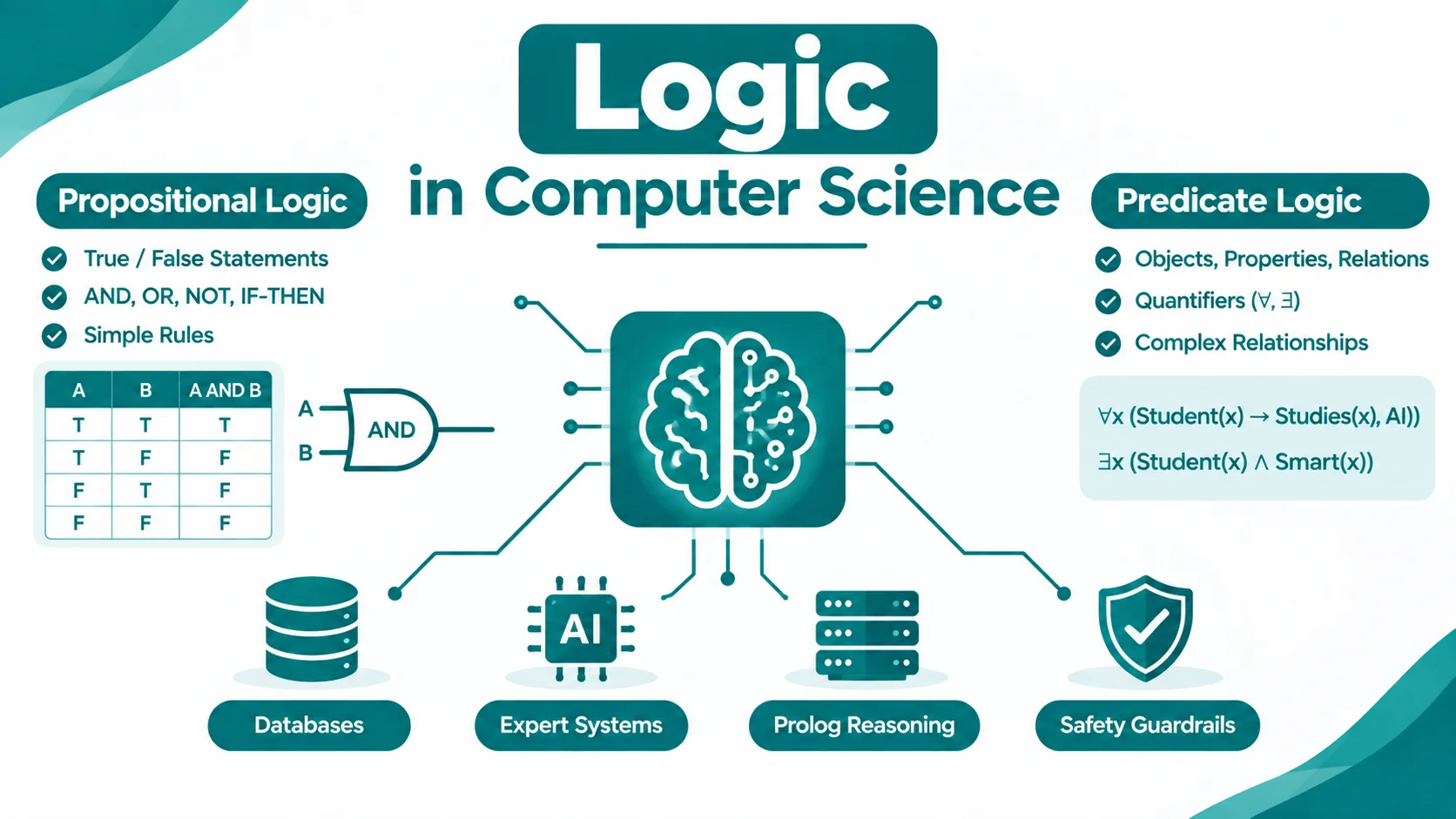
Logic in Computer Science – Knowledge Representation Guide

image showing logic in computer science with simple examples

Quick Answer (TL;DR):Logic in computer science is a formal system that encodes facts so machines can reason, infer new information, and make decisions. Propositional logic handles simple true/false statements. Predicate logic handles complex relationships using variables and quantifiers. In 2026, logic still powers databases, expert systems, Prolog-based reasoning, and safety guardrails inside modern AI. Logic … Read more

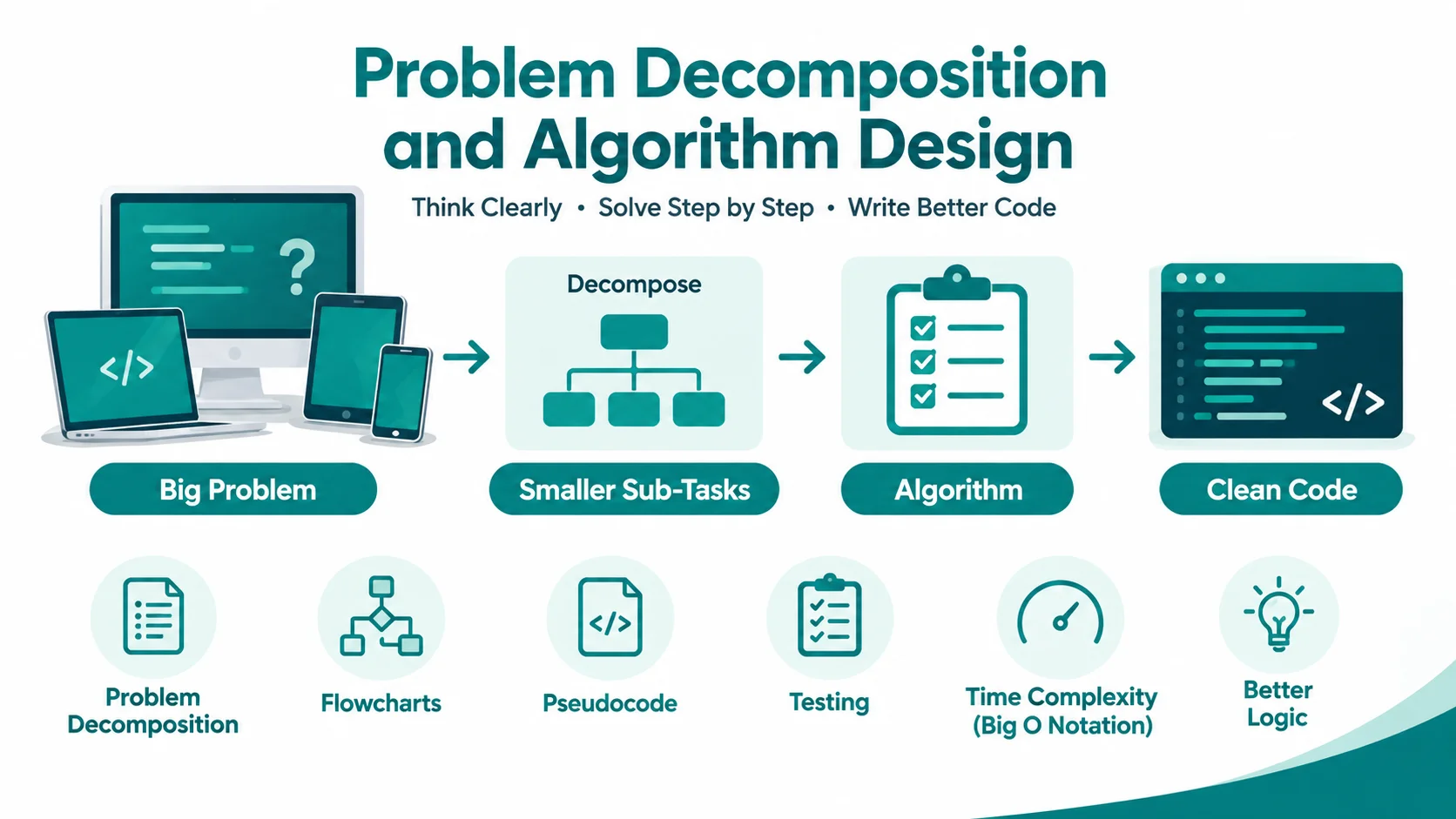
Problem Decomposition and Algorithm Building – Easy Guide

image showing Problem Decomposition and Algorithm Building

Every big coding problem looks scary at first. But every big problem is just a stack of small problems. This is the real secret behind good programming. In this guide, I break down problem decomposition and algorithm design. I use examples from my own teaching experience. You will learn how expert programmers think, not just … Read more

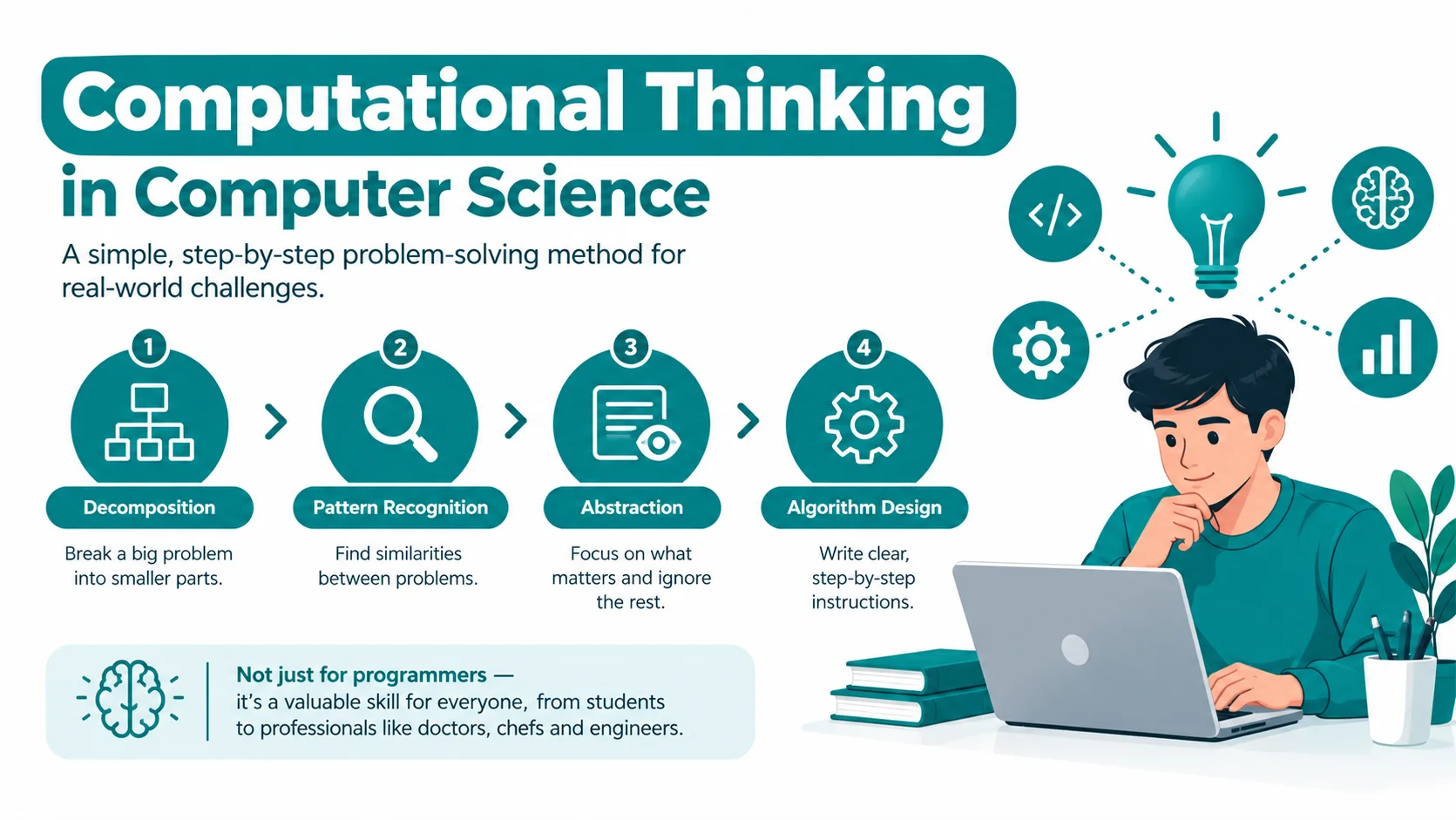
What is Computational Thinking – A Problem-Solving Approach

image showing Computational Thinking in computer science

TL;DR / Quick Answer: Computational thinking is a simple, step-by-step problem-solving method that breaks complex challenges into four easy steps. These 4 steps are Decomposition, Pattern Recognition, Abstraction, and Algorithm Design. It is not just for computer programmers but also for professionals like doctors, chefs, and engineers use it every day. In today’s AI-driven world, … Read more