
What is Star Topology- Definition and Its Uses
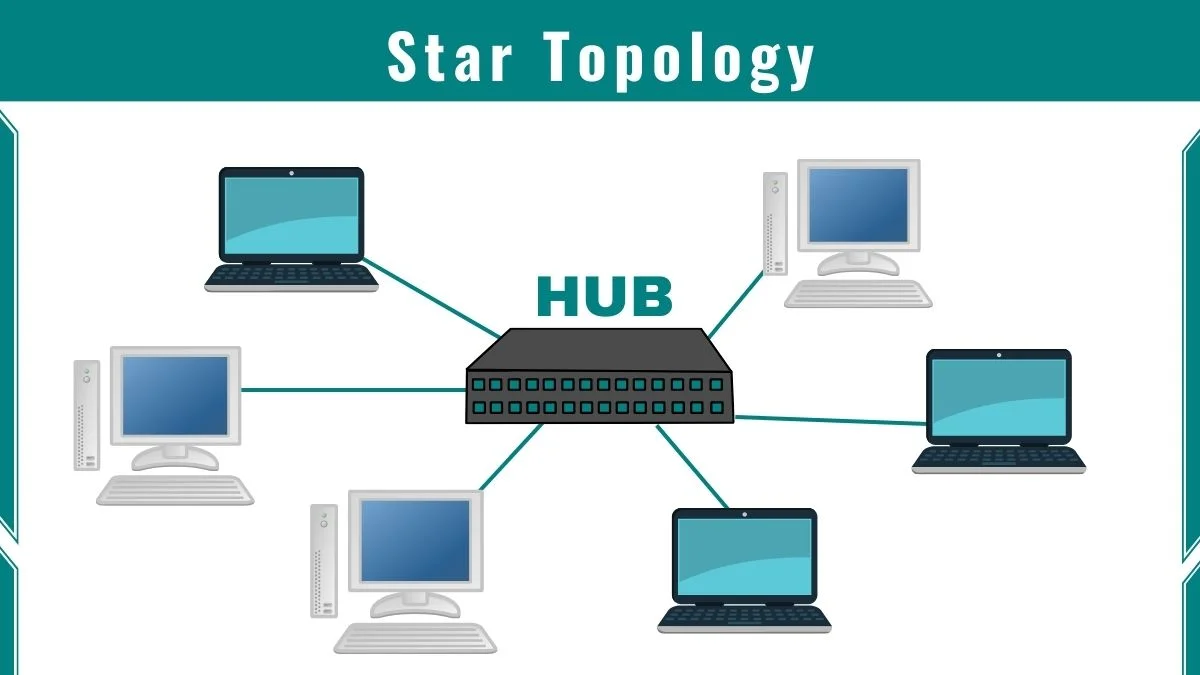
Star-Topology-Diagram

Star topology is one of the most common and reliable ways to connect computers in a network. In this design, all nodes (computers, printers, etc.) are connected to a single central hub or switch. Think of it like a star shape, where the central switch is the core, and all devices are the points radiating … Read more
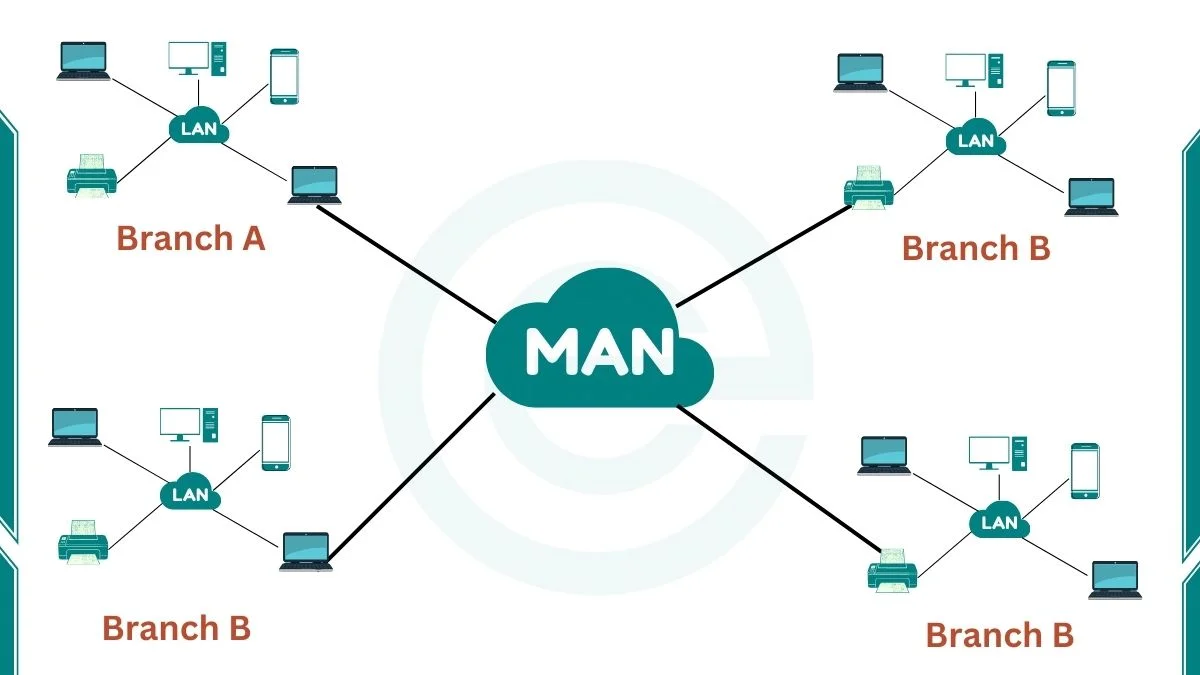
What is MAN Network-Examples, Benefits, and Working

MAN’s full form is Metropolitan Area Network. MAN is a computer network that covers a geographic area of a few kilometers to around 50 kilometers. The term “metropolitan” refers to its size, not necessarily an urban area. MAN network is bigger than a LAN (Local Area Network) but smaller than a WAN (Wide Area Network). … Read more

What is WAN (Wide Area Network) – Advantages and Disadvantages of WAN

WAN stands for a wide area network. This type of network covers a large area and connects computers and other devices in different cities and countries. WAN typically consists of several connected LANs. The computers in a WAN connect through telephone lines, leased lines, or satellites. The transmission rate of a WAN ranges from 56 … Read more

Computer Network-Types and Network Topologies

A computer network consists of two or more connected computers to share information and resources. The resources may include printers, hard disks, etc. The computers in the network are interconnected via communication channels. These channels may be physical cables or wireless connections. Computer networks are commonly used in every field of life. People use computer … Read more

Advantages and Disadvantages of Bus Topology

The advantages of bus topology are Simplicity and ease of use, Reduced cable usage, and Less cost. Its disadvantages are security concerns and a Single point of failure. In a previous article, we studied the concept of bus topology, where devices are connected sequentially using a single cable or backbone. This article aims to delve … Read more

Difference Between WAN and LAN

LANs prioritize speed and security within confined spaces. This means LANs are designed to connect devices like computers quickly and securely when they are in a small physical area. While WANs focus on connecting geographically spread devices over long distances in cities or countries. WANs use public infrastructure like telephone lines, satellites, and cellular networks to achieve these connections.

What is Bus Topology – Examples, Characteristics and Working

Bus-topology-diagram

Bus topology is a type of network. It supports a small number of computers. All computers or devices are connected to a common communication medium in a bus topology. This medium is called a bus or backbone. The terminators are used at the end of a bus to absorb the signal and stop them from … Read more

What is LAN (Local Area Network)- Advantages and Disadvantages of LAN

LAN stands for Local Area Network. LAN is the most common type of computer network. LAN is defined as a group of computers and network devices connected together within a limited physical area. This geographical area is usually small. For example, it could be a single office, a home, a school computer lab, or a … Read more