What is Analog Signal -Definition, Characteristics, Working
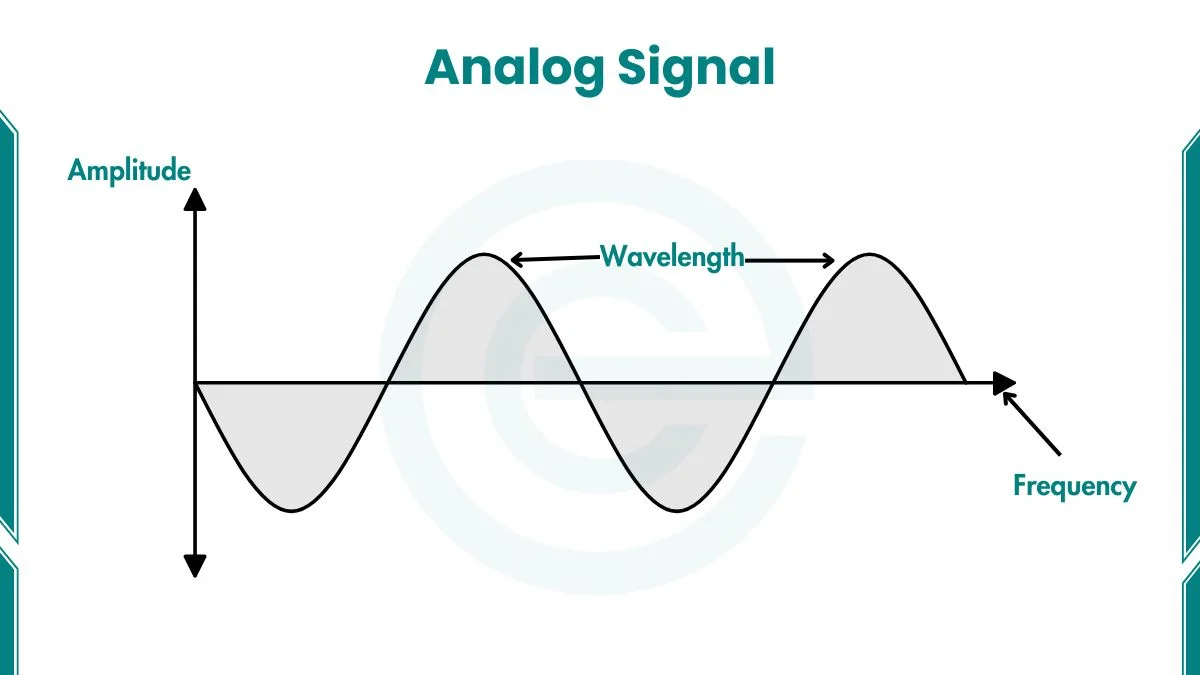
image showing analog signal

An analog signal is a type of signal that is continuous. This means it can have any value within a range. For example, when you speak into a microphone, your voice is converted into an electrical signal. This signal is analog because it changes smoothly over time. It does not have sudden jumps or breaks. … Read more
Data Communication Models -Layers & Importance

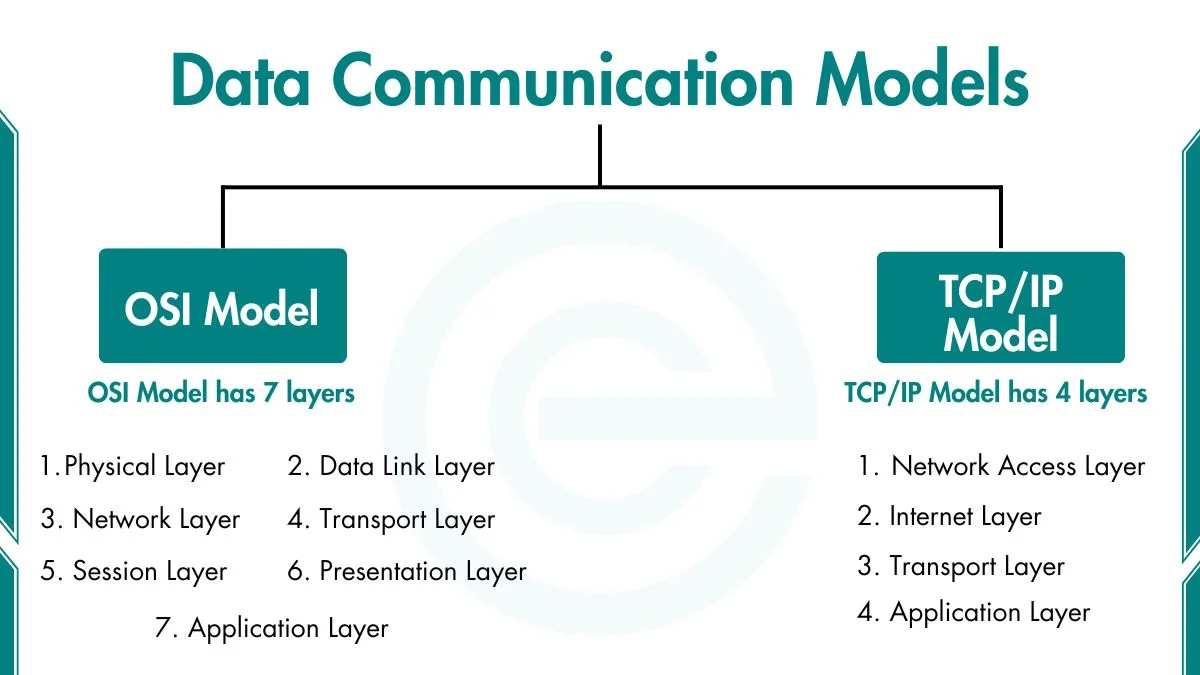
image showing Data Communication Models

Data communication models help us understand how data is transmitted between devices. There are two main models: the OSI model and the TCP/IP model. These models provide a framework for organizing and standardizing communication processes. Data Communication Models in Computer Networks The following are the two models of data communication: 1. OSI Model The OSI (Open … Read more

Synchronous Serial Transmission -Protocols & Working

image showing Synchronous Serial Transmission working

Synchronous Serial Transmission is a method of sending data one bit at a time in a fixed, timed sequence. A clock signal is used to keep the sender and receiver synchronized. This clock signal ensures that both devices know when to send and receive data. Synchronous Serial Transmission Definition Synchronous Serial Transmission is a way … Read more

Serial Transmission Protocols -Comparison Between Protocols

image showing Serial Transmission Protocols

Protocols are rules that devices follow to communicate with each other. They ensure that data is sent and received correctly. Without protocols, devices would not understand each other, and data communication would fail. Protocols also help in error detection and correction, making communication reliable. Serial Transmission Protocols List The following is the list of protocols used … Read more

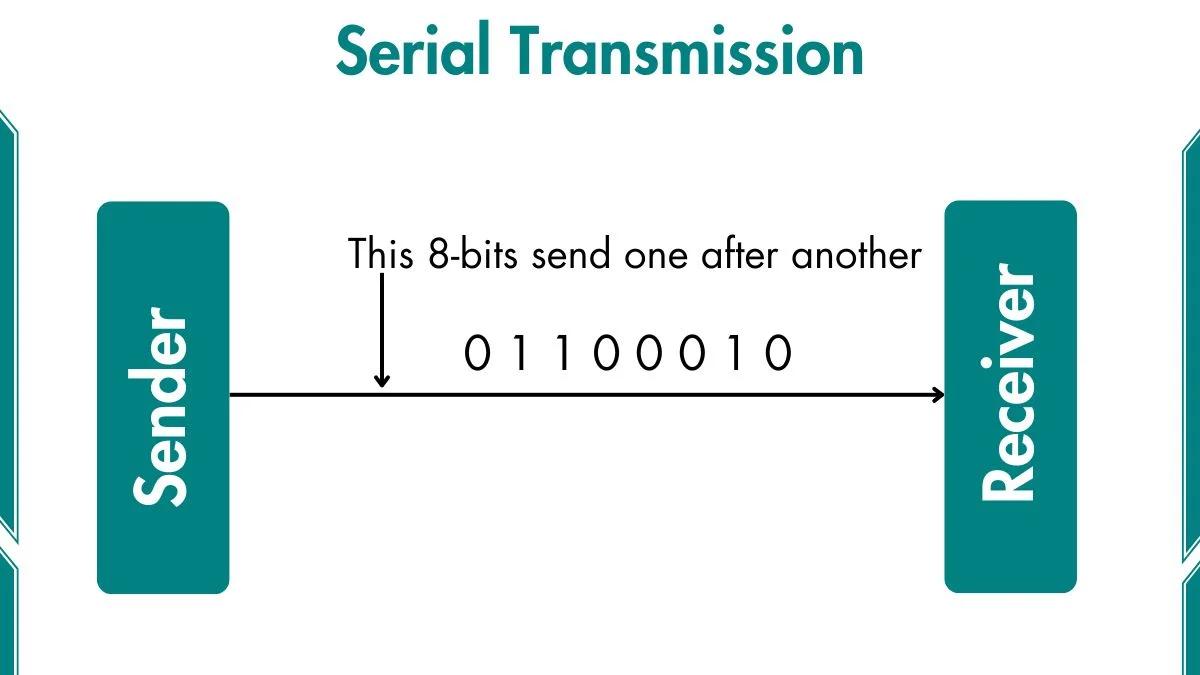
What is Serial Transmission -Types, Working & Advantages

image showing serial transmission

Serial Transmission is a type of data transmission. It is a method of sending data one bit at a time over a communication channel. This method is used in many devices we use daily, such as USB cables, internet connections and Bluetooth devices.  Serial Transmission Definition Serial transmission is the process of sending data bit … Read more

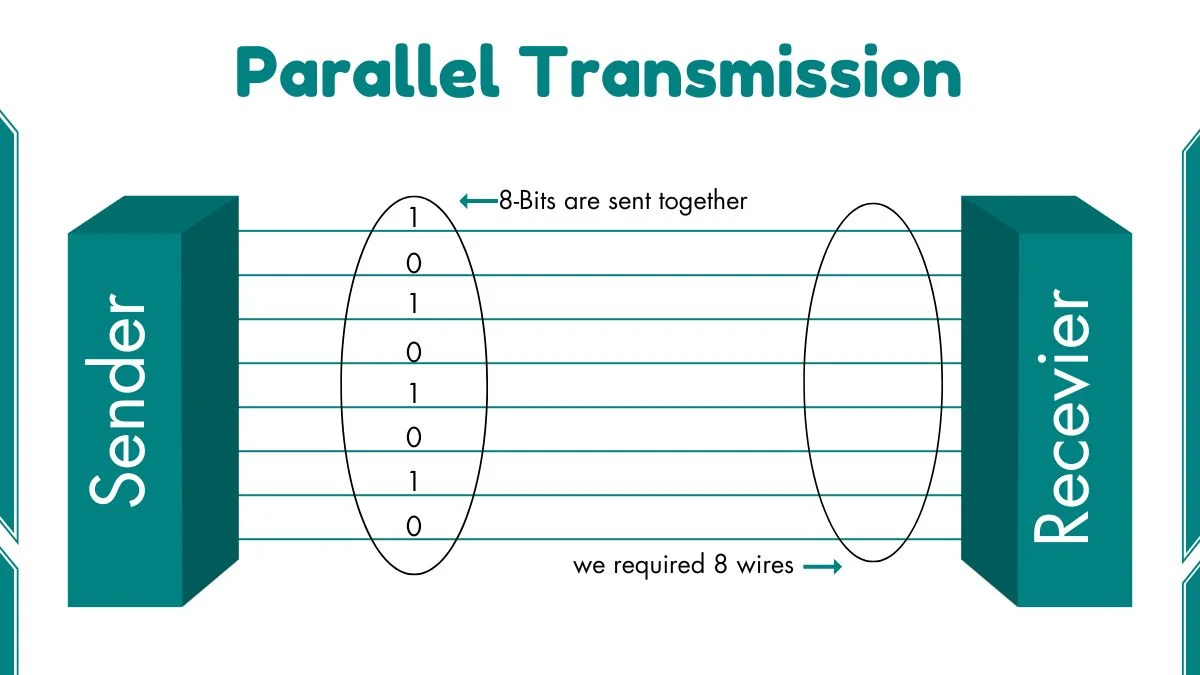
What is Parallel Transmission? -Components, Advantages

image showing Parallel Transmission

Parallel transmission is a method of sending data between devices. It sends multiple bits of data at the same time. This makes it faster than serial transmission, which sends one bit at a time. In this article, we will learn what parallel transmission is, how it works, its advantages, disadvantages, and real-world applications. Define Parallel … Read more

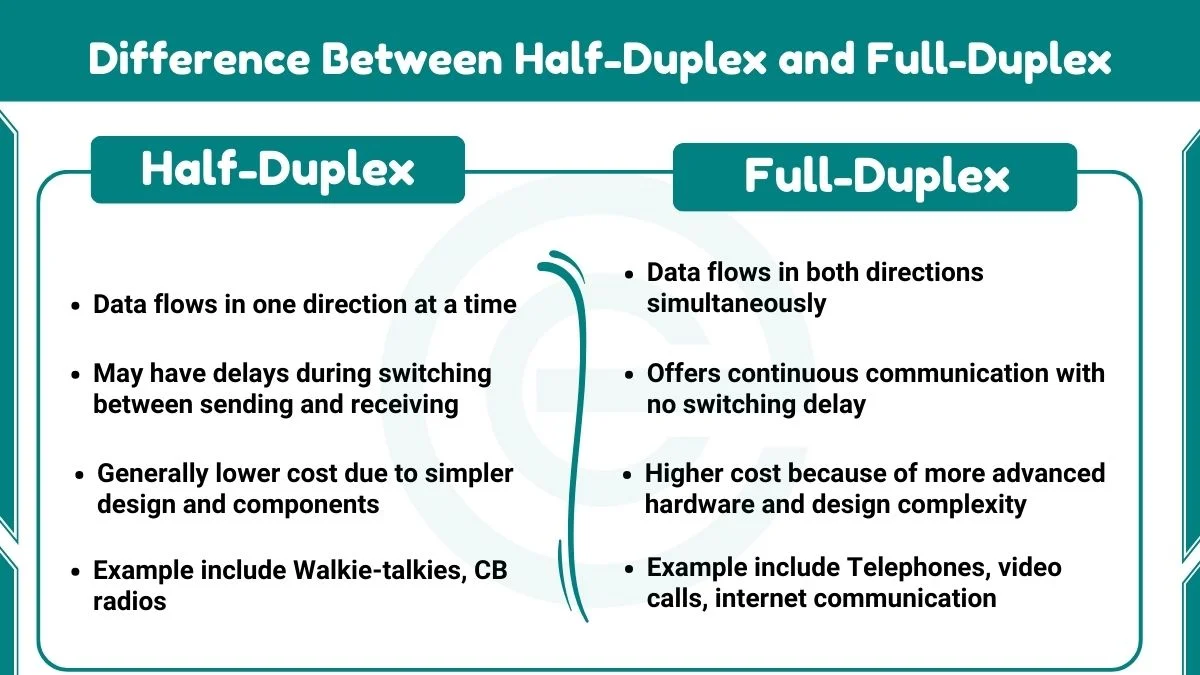
Difference Between Half-Duplex and Full-Duplex Communication

image showing In half-duplex, data flows in one direction at a time. In full-duplex, data flows in both directions at the same time. This basic difference affects how devices send and receive information.

Half-duplex and full-duplex are two methods of data transmission. The main Difference Between Half-Duplex and Full-Duplex Communication is simple. In half-duplex, data flows in one direction at a time. In full-duplex, data flows in both directions at the same time. This basic difference affects how devices send and receive information. What is Half-Duplex? Half-duplex is … Read more

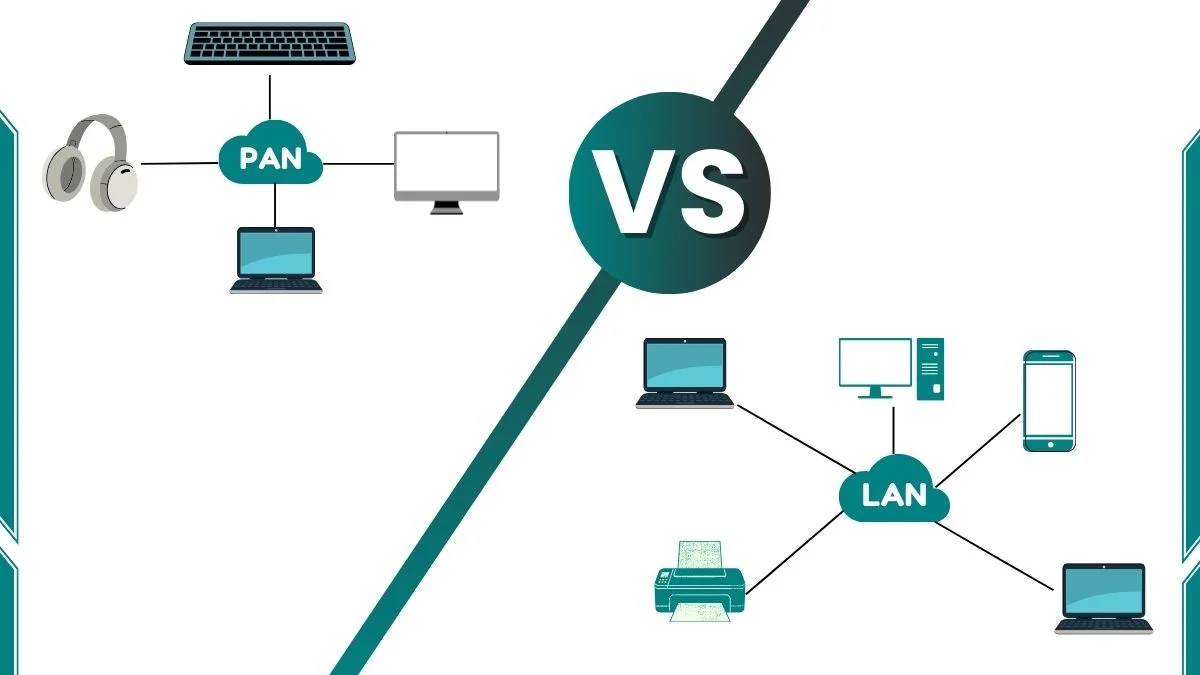
Differences Between PAN and LAN

image showing difference between PAN and LAN.

The main difference between PAN and LAN is their range and purpose. PAN is for personal use, and LAN is for group or organizational purposes. PAN and LAN both are types of computer networks. PAN is a small network connecting devices such as smartphones and a smartwatch over a short distance. On the other hand, … Read more

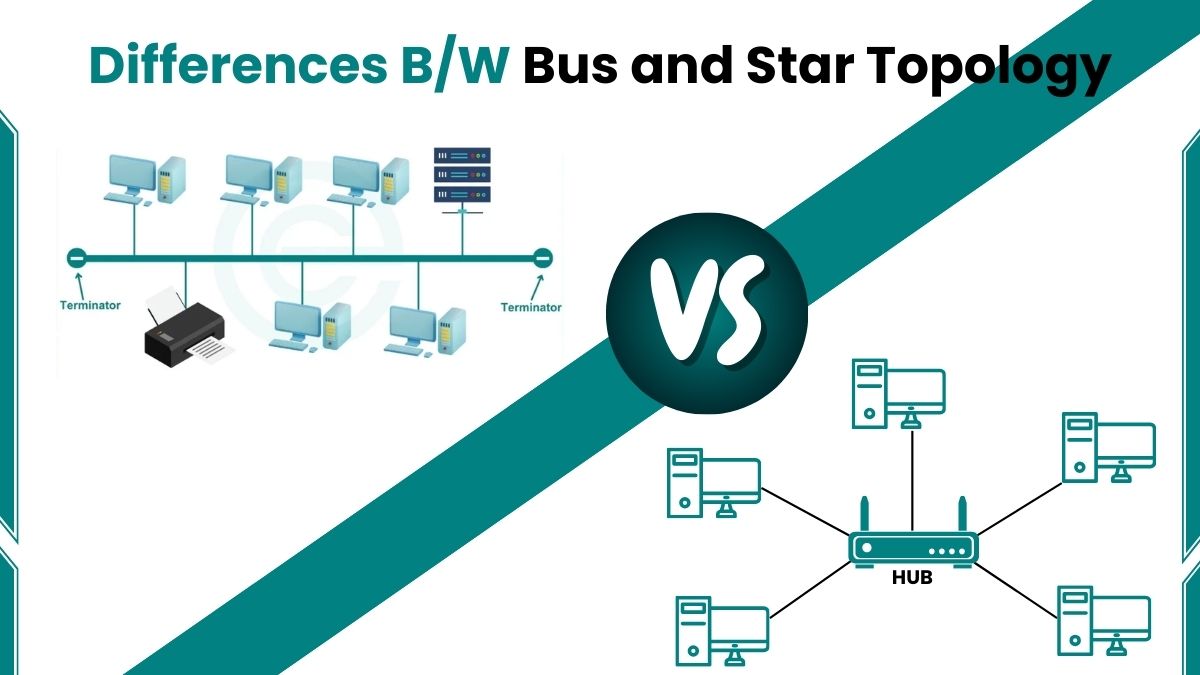
Differences Between Bus and Star Topology

image showing Differences Between Bus and Star Topology

The main difference between bus and star topology is how devices are connected. All devices are linked to a central hub or switch in star topology. In comparison, bus topology uses a single backbone cable that connects all the devices. These differences affect several factors, such as scalability, fault tolerance, and network performance. Star Topology … Read more

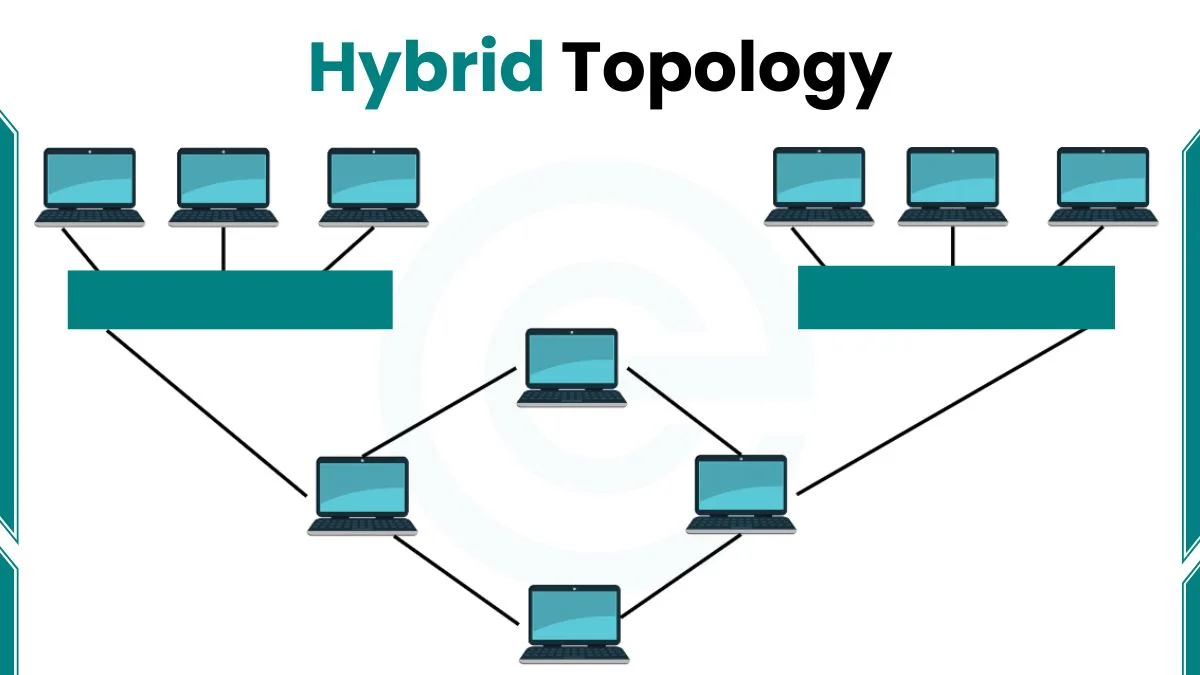
What is Hybrid Topology -Types, Applications

image showing diagram of Hybrid Topology

Hybrid topology is a type of network topology that combines two or more different types of topologies, such as star, bus, and ring, to create a flexible and scalable network structure. It is useful in large networks where a single topology is not enough. It allows networks to be designed based on the specific needs … Read more