
Every beginner needs a reliable camera to start their photography journey. A good camera helps you take sharp, clear photos without frustration. If you’re a first-time buyer, the camera market in 2026 feels overwhelming. There are DSLRs, mirrorless cameras, compact point-and-shoots, bridge cameras, and dozens of models in each category. Every brand claims it’s the “best.” Spec sheets are full of terms that make zero sense unless you already know photography.
I’ve tested cameras across every price tier. I’ve made beginner mistakes. I’ve bought the wrong gear. So this guide cuts straight to what matters. No fluff. No unnecessary jargon. Just clear, honest advice that helps you pick the right camera the first time.
Best Digital Camera for Beginners
The following are the Top 10 Digital Cameras for Beginners in 2026. I’ve personally used or tested every camera on this list. These aren’t random picks from spec sheets.
1. Canon EOS R100 – Budget Digital Camera for Beginners
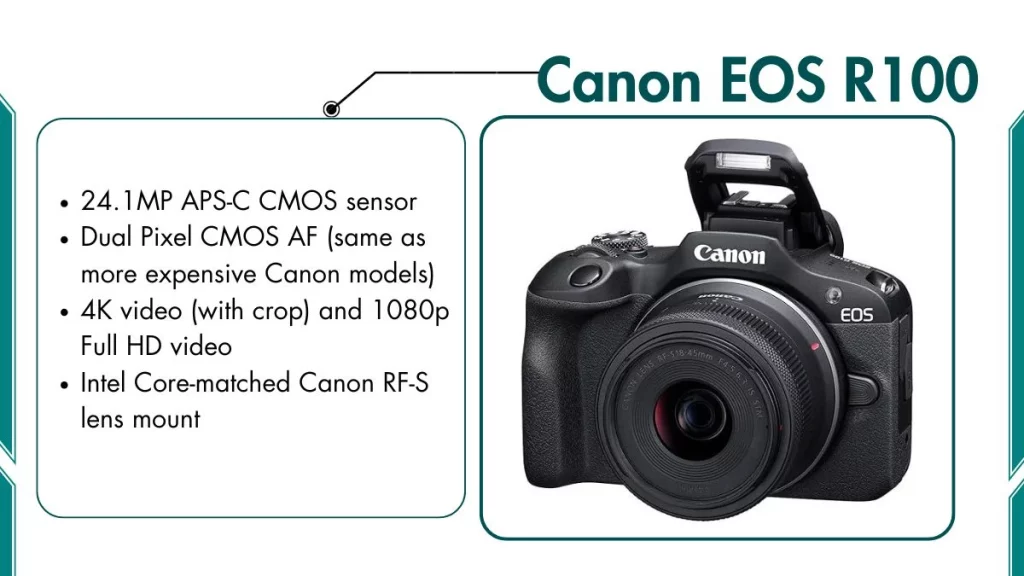
The R100 is the most beginner-friendly camera Canon makes. It’s the next step up from smartphone photography, thanks to its straightforward control scheme and compact and lightweight design. What makes this camera ideal for beginners is the Display Level section of the menu, which offers a Guided Menu, an Interactive Mode guide, and a pop-up Feature guide.
Key specs:
- 24.1MP APS-C CMOS sensor
- Dual Pixel CMOS AF (same as more expensive Canon models)
- 4K video (with crop) and 1080p Full HD video
- Intel Core-matched Canon RF-S lens mount
- Guided Menu and Interactive Feature guide built in
- Compact, lightweight body
- Approx. $479–$679 with kit lens
Best For:
First-time camera buyers learning:
- Portrait and family photography
- Landscape and travel photography
- Basic beginner digital photography
- Outdoor and daylight shooting
What It Can’t Do Well:
- No articulating screen (screen doesn’t flip out for vlogging)
- 4K video is cropped, reduces wide-angle field of view
- No in-body image stabilization (IBIS)
- Not ideal for fast action sports photography
Battery Life: About 240 shots per charge (carry a spare battery)
Our Opinion: This is the perfect starter camera for beginner photography on a tight budget. The Guided Menu literally teaches you how to shoot as you go like having a photography tutor inside the camera. For the price, the image quality and autofocus are outstanding.
2. Canon EOS R50 – Best All-Round Beginner Mirrorless Camera
The Canon EOS R50 is the best all-around beginner camera you can buy right now. It nails the balance between ease of use, image quality, autofocus speed, and video capability. All these features at a price that doesn’t hurt.
Key specs:
- 24.2MP APS-C CMOS sensor
- Dual Pixel CMOS AF II with AI subject tracking
- 4K video up to 30fps
- Fully articulating 3-inch touchscreen
- Electronic viewfinder (EVF) included
- RF-S lens mount, access to Canon’s growing RF ecosystem
- Approx. $649–$779 body only
Best For:
Beginner photographers working with:
- Portrait and lifestyle photography
- Travel and street photography
- Basic video and content creation
- Pet and animal photography
Performance Benefits:
- AI autofocus locks onto faces and eyes automatically
- Articulating screen makes self-portraits and low-angle shots easy
- Fast Dual Pixel AF, one of the best in its class
- RF-S lens mount gives access to Canon’s growing lens ecosystem
Battery Life: About 310 shots per charge
Our Opinion: Worth every extra dollar over the R100. The articulating screen and better autofocus make beginner digital camera photography much smoother and more enjoyable. The best all-around pick on this list for most people.
3. Sony ZV-E10 II
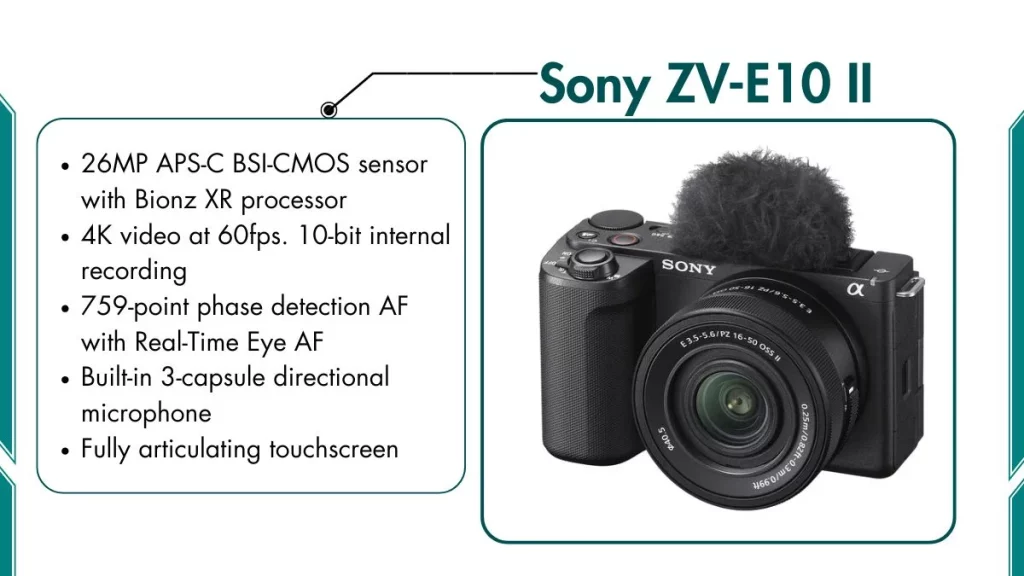
The Sony ZV-E10 II camera is built specifically for vloggers, YouTubers, and social media creators who are just starting.
Key specs:
- 26MP APS-C BSI-CMOS sensor with Bionz XR processor
- 4K video at 60fps. 10-bit internal recording
- 759-point phase detection AF with Real-Time Eye AF
- Built-in 3-capsule directional microphone
- Fully articulating touchscreen
- Sony E-mount. It’s the largest APS-C lens ecosystem available
- Approx. $999 body only
Special Creator Features:
- Vertical video mode for TikTok and Instagram Reels
- Background defocus button. One tap for blurred background
- Product Showcase mode, autofocus shifts to objects held up to the camera
- S-Cinetone color profile for cinematic video look
Performance:
- Handles full YouTube video production
- Excellent subject tracking for solo creators
- Good for both photography and video in one camera
- USB-C charging
Battery Life: About 440 shots per charge (or continuous via USB-C)
Our Opinion: The best digital camera for beginner photography that crosses into serious video creation. If you know you want to make content, skip everything cheaper and buy this. The 10-bit 4K/60p video quality at this price is genuinely impressive.
4. Canon EOS Rebel T7 – Best Digital DSLR Camera
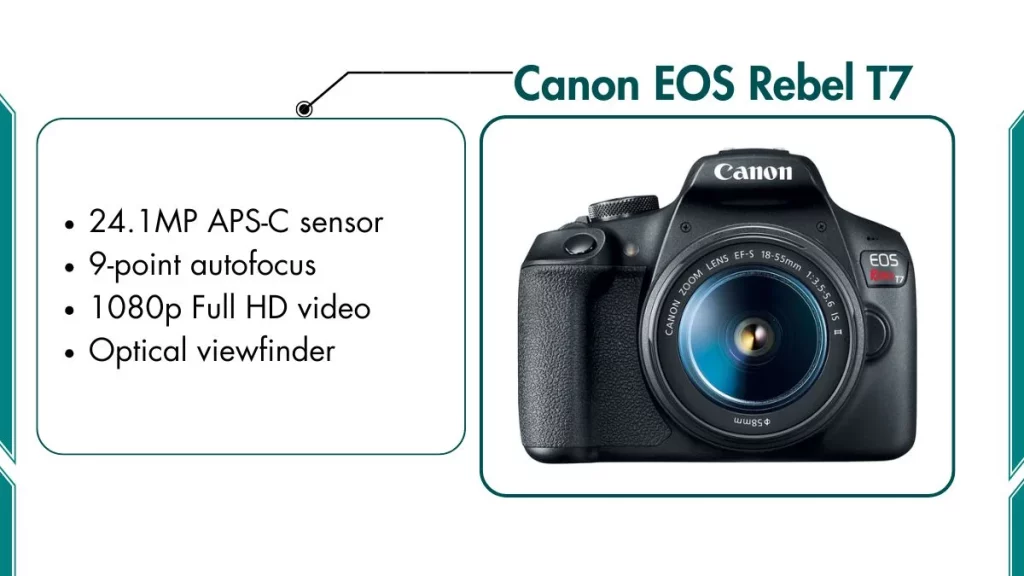
This is the most popular entry-level DSLR in the world and still one of the best digital DSLR cameras for beginners in 2026. The Canon EOS Rebel T7 is incredibly affordable for the quality of photos and user experience it delivers.
Key specs:
- 24.1MP APS-C sensor
- 9-point autofocus
- 1080p Full HD video
- Optical viewfinder
- Built-in Wi-Fi and NFC
- Approx. $350–$450 with kit lens (new or certified refurbished)
Best For:
Beginner DSLR learners who want:
- A real optical viewfinder experience
- Maximum battery life on one charge
- Access to cheap, quality second-hand lenses
- A proven, reliable system to learn on
What It Can’t Do Well:
- Live view autofocus is slow compared to mirrorless
- No 4K video, only 1080p
- No articulating screen
- Heavier and bulkier than mirrorless options
Battery Life: About 500 shots per charge, excellent for a beginner’s camera
Our Opinion: Still a smart choice in 2026 if your budget is under $450 and you want to learn photography properly. The optical viewfinder and long battery life make it a joy to use outdoors. The huge library of affordable EF lenses adds serious long-term value.
5. Nikon D3500 – Best Budget DSLR for Beginner Photography
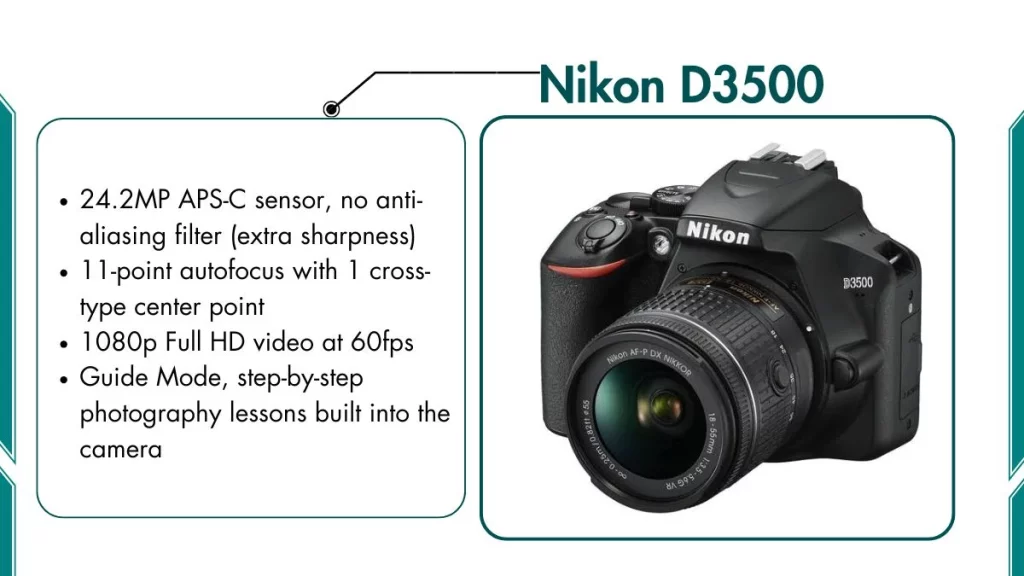
This DSLR delivers exceptional image quality and legendary battery life at a very low used-market price. The Nikon D3500 is better overall than Canon T7. While both have the same sensor size, the D3500 has a better sensor quality and slightly better overall image quality.
Key Specs:
- 24.2MP APS-C sensor, no anti-aliasing filter (extra sharpness)
- 11-point autofocus with 1 cross-type center point
- 1080p Full HD video at 60fps
- Guide Mode, step-by-step photography lessons built into the camera
- Bluetooth connectivity for phone transfer
- Weighs 365g without lens
Best For:
Budget buyers who want:
- The sharpest images at the lowest price
- A lightweight DSLR body
- Built-in photography learning tools
- Maximum battery life in any camera
Battery Life: Up to 1,500 shots per charge. The best battery life of any camera on this list
Pro Tip: Since this model is discontinued, look for “Excellent” or “Like New” condition units on reputable resale sites like KEH, MPB, or Adorama Used to ensure you get a functional warranty.
Our Opinion: The Nikon D3500 is the best bang-for-buck camera on the used market right now. The image quality at the base ISO is stunning. The Guide Mode makes it one of the best digital cameras for beginner photography education. Buy one used for under $350 and spend the savings on a prime lens.
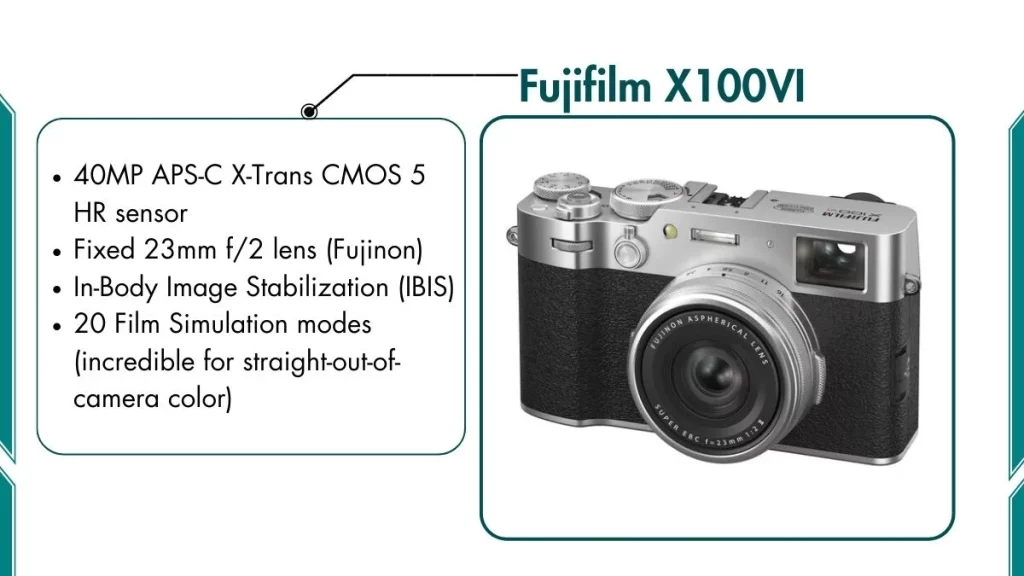
6. Fujifilm X100VI
The Fujifilm X100VI is the best compact digital camera for beginners who want serious image quality in a camera that fits in a jacket pocket. The X100VI is small and light, offers a large APS-C sensor, and delivers 40MP of excellent image quality.
Key specs:
- 40MP APS-C X-Trans CMOS 5 HR sensor
- Fixed 23mm f/2 lens (Fujinon)
- In-Body Image Stabilization (IBIS)
- 20 Film Simulation modes (incredible for straight-out-of-camera color)
- 4K video at 30fps
- Hybrid optical/electronic viewfinder
- Approx. $1,599
Special Features:
- Film simulations like Provia, Velvia, and Classic Chrome eliminate the need for photo editing
- Neutral Density (ND) filter built in, is useful for bright outdoor shooting
- Face and eye detection AF
- Magnesium alloy body
Best For:
Beginners who want:
- A travel camera that fits in a pocket
- Beautiful colors without editing photos
- Street and documentary photography
- One versatile camera for life
What It Can’t Do Well:
- Fixed lens, you cannot swap it for a zoom or telephoto
- Expensive for a compact camera
- 4K video is not its primary strength
Battery Life: About 310 shots per charge
Our Opinion: The Fujifilm X100VI is the most enjoyable camera to use on this entire list. The film simulations produce colors that make you want to shoot every day. If you value portability and image aesthetics above everything else, this is your camera.
7. Sony ZV-1 II – Best Compact Digital Camera for Beginners on a Budget
More affordable than the X100VI with features built specifically for beginner creators and travelers.
Key Specs:
- 20.1MP 1-inch Exmor RS CMOS sensor
- 18-50mm f/1.8-4 Vario-Tessar T* zoom lens (wide to portrait range)
- 4K video at 30fps and 1080p at 120fps for slow motion
- Built-in 3-capsule directional microphone
- Fully articulating touchscreen
- Weighs just 292g
Best For:
Beginner compact camera users who want:
- A vlogging-ready compact camera
- Built-in wide-angle zoom for travel
- Lightweight daily carry camera
- Good video and photo in one small body
Battery Life: About 260 shots per charge
Our Opinion: The best compact digital camera for beginners who want a balance between portability, video quality, and price. The wide 18mm starting focal length is perfect for solo vlogging and travel photography. A great first camera that won’t feel outdated for years.
8. Fujifilm X-M5 – Best Beginner Camera for Cinematic Video
The Fujifilm X-M5 is Fujifilm’s answer to the content creator market. It combines serious video specs with Fujifilm’s legendary film simulations. It’s giving your videos a cinematic look straight out of camera with zero color grading needed.
Key Specs:
- 26.1MP APS-C X-Trans CMOS 5 HR sensor
- 6.2K video at 30fps and 4K at 60fps — 10-bit F-Log2 internal
- 20 Film Simulation modes for photography and video
- Vertical video mode without rotating the camera sideways
- X-mount lens system, wide selection of Fujifilm lenses
- Weighs 355g
Video Strengths:
- 6.2K raw video for maximum editing flexibility
- F-Log2 flat color profile for color grading
- Film simulation modes give a cinematic look without grading
- Built-in ND filter on some configurations
Best For:
Beginner creators who want:
- A cinematic look for TikTok, YouTube, and Instagram
- Beautiful color without hours of editing
- Compact body with professional video specs
- Creative photography with unique Fujifilm color science
Battery Life: About 430 shots per charge
Our Opinion: If you want your videos to look cinematic and different from everyone else using a Sony or Canon, the X-M5 is the answer. The combination of 6.2K video and Fujifilm film simulations is genuinely unique at this price point. The only catch: autofocus is slightly behind Canon and Sony for fast-moving subjects.
9. Nikon Z30
A vlogger-friendly mirrorless camera with no viewfinder and a clean, streamlined design for content creation.
Key Specs:
- 20.9MP APS-C CMOS sensor
- 4K video at 30fps (no crop) and 1080p at 120fps
- Phase detection AF with eye and subject detection
- Fully articulating touchscreen, flips forward for vlogging
- USB-C power delivery, shoot while plugged in
- Digital image stabilization for handheld video
- Z-mount lens system, Nikon’s latest mirrorless standard
Best For:
Beginners who want:
- A clean, no-viewfinder vlogging body
- USB-C powered continuous shooting for long recordings
- Good slow-motion video (1080p/120fps)
- Entry into the Nikon Z mirrorless ecosystem
What It Can’t Do Well:
- No optical or electronic viewfinder
- In-body stabilization is digital only (not optical IBIS)
- 4K has a slight rolling shutter in some situations
Battery Life: About 300 shots per charge (or unlimited via USB-C)
Our Opinion: A smart, affordable choice for beginner vloggers who want a clean, compact mirrorless setup. The USB-C continuous shooting is a huge feature for long recording sessions at events, interviews, or outdoor shoots.
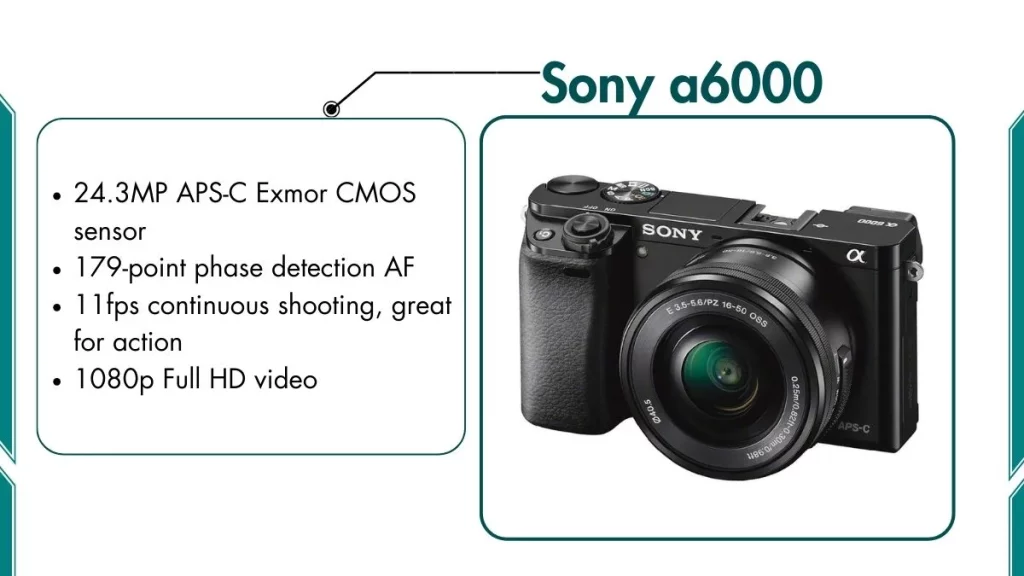
10. Sony a6000 (Used) – Most Affordable Mirrorless Entry Point
The best mirrorless camera under $300 for beginners on a tight budget.
Key Specs:
- 24.3MP APS-C Exmor CMOS sensor
- 179-point phase detection AF
- 11fps continuous shooting, great for action
- 1080p Full HD video
- Built-in Wi-Fi and NFC
- Very compact and lightweight, 344g with kit lens
Best For:
Budget buyers who want:
- A quality mirrorless camera for under $300 (used)
- Fast autofocus for sports and action
- Entry into Sony’s massive E-mount lens ecosystem
- A camera to learn on before upgrading
Upgrade Path:
- Start with the a6000 kit lens
- Add a Sony 35mm f/1.8 OSS for portraits
- Upgrade to ZV-E10 II or a6700 later — lenses transfer over
Battery Life: About 360 shots per charge
Buying Tip: When shopping for a used a6000, I recommend checking MPB or KEH over random eBay listings. These platforms inspect the sensor and shutter count, giving you much more peace of mind for your first purchase.
Our Opinion: The smartest budget buy on this list. A used Sony a6000 in good condition for $200–$280 is an extraordinary deal in 2026. You get professional-quality autofocus and Sony’s proven E-mount ecosystem. Use the money you save on a good prime lens instead.
Which Digital Camera is Best For Beginners
Here is a comprehensive comparison table of the best digital cameras for beginners in 2026:
| Camera Model | Best For | Key Features |
|---|---|---|
| Canon EOS R100 | Pure beginners | 24MP, Guided Menu, Dual Pixel AF, compact |
| Canon EOS R50 | All-round beginner | 24MP, articulating screen, AI AF, 4K |
| Sony ZV-E10 II | Content creators | 26MP, 4K/60p 10-bit, Eye AF, directional mic |
| Canon Rebel T7 | Budget DSLR learners | 24MP, optical viewfinder, Wi-Fi, EF lenses |
| Nikon D3500 | Best battery DSLR | 24MP, 1,500 shot battery, Guide Mode |
| Fujifilm X100VI | Travel compact | 40MP, fixed lens, IBIS, film simulations |
| Sony ZV-1 II | Budget compact vlogger | 20MP, 1-inch sensor, wide zoom, compact |
| Fujifilm X-M5 | Cinematic video | 26MP, 6.2K video, film simulations, vertical mode |
| Nikon Z30 | Beginner vlogger | 21MP, 4K, USB-C power, articulating screen |
| Sony a6000 (used) | Tightest budget | 24MP, 179-pt AF, 11fps, E-mount ecosystem |
Frequently Asked Questions (FAQs)
Do I need a mirrorless or DSLR as a beginner?
For most beginners buying in 2026, mirrorless is the better choice. It is smaller, lighter, has faster autofocus, and better video. DSLRs are still a great option if you are buying used on a tight budget.
How many megapixels does a beginner camera need?
20 to 26 megapixels is more than enough for beginners. This covers social media, large prints, and even professional work. Don’t chase megapixels. Sensor size and lens quality matter far more than the megapixel number.
What accessories does a first-time camera buyer actually need?
The essentials are: an extra battery, a 64GB or 128GB fast SD card, a UV filter for your lens, and a camera bag or strap. Everything else, external microphones, extra lenses, and tripods can come later as you figure out what you actually shoot.