
Email is used for communicating, collaborating, Job Applications, Building Professional Networks, Creating Online Accounts and many more.
Did you know that 392.5 billion emails fly across the internet every single day in 2026? That means while you read this sentence, over 4.5 million emails were sent worldwide. With 4.73 billion email users globally, email remains the most powerful digital communication tool, more widely used than any social media platform.
What is the Use of Email?
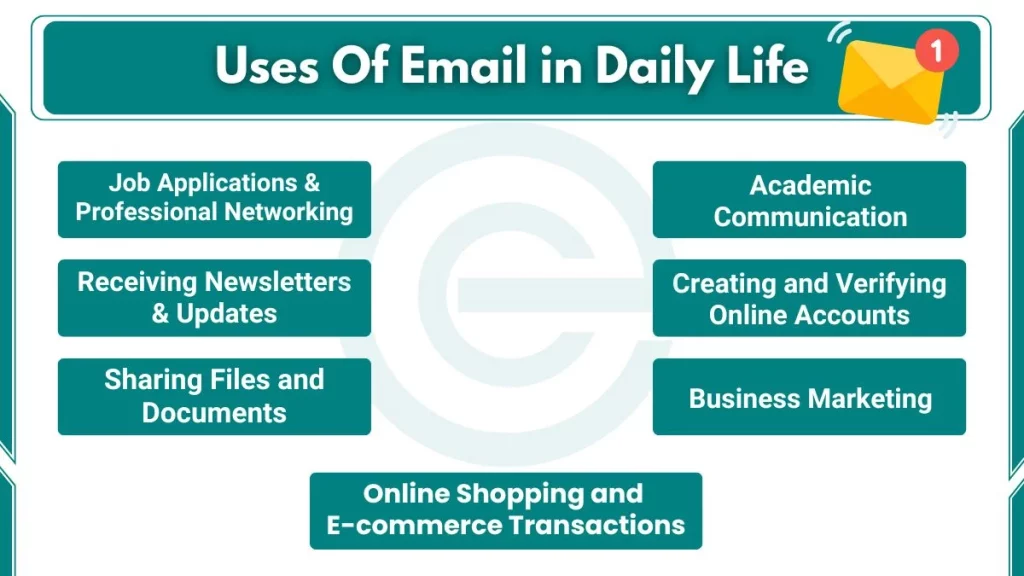
Here are some important uses of email in daily life:
1. Academic Communication
Email serves as the primary communication channel between students and teachers. You use email to ask questions about assignments, request help with difficult topics, and discuss grades. Teachers prefer email because it creates a written record of conversations.
Email is also used to collaborate on group projects. You can share ideas, coordinate meeting times, and divide work responsibilities through email threads. Platforms like Google Classroom and Canvas integrate with email to send assignment notifications and updates.
2. Job Applications and Professional Networking
Email plays a critical role in career preparation and job searching. You submit resumes and cover letters through email when applying for jobs or internships. Your email address creates a first impression, so use a professional format like firstname.lastname@email.com.
Email also helps you build professional networks. You can request informational interviews with professionals in fields that interest you. LinkedIn connections often begin with email introductions. These contacts provide career guidance and potential job opportunities.
3. Accessing Student Discounts
Your student email address unlocks significant savings on software, services, and products. Companies verify student status through .edu email addresses. These discounts help students access expensive tools and services at reduced prices.
Platforms like UNiDAYS, Student Beans, and SheerID verify student status and connect you with hundreds of discounts. You receive promotional emails about new offers and exclusive deals through these services.
4. Receiving Newsletters and Updates
Email delivers curated information directly to your inbox. Newsletters help you stay informed about topics you care about without searching. You subscribe to content that matches your interests and goals.
Email marketing generates strong engagement with 35% average open rates in 2026. Over 93% of people check email daily, making it an effective channel for information delivery. You control which newsletters you receive through subscription management.
5. Creating and Verifying Online Accounts
Nearly every website and application requires an email address for registration. Email serves as your digital identity across the internet. Services use email to verify that real people create accounts and prevent spam.
Security systems rely on email for identity verification. When you log into accounts from new locations, services send confirmation emails. This extra layer protects your accounts from unauthorized access attempts.
6. Online Shopping and E-commerce Transactions
Email connects buyers and sellers throughout the online shopping experience. Retailers send order confirmations immediately after you complete purchases. These receipts serve as proof of transaction and include order numbers, items, and costs.
Marketing emails share exclusive deals and personalized recommendations. Research shows 60% of consumers subscribe to brand emails for promotional updates.
7. Personal Communication and Event Planning
Email provides a formal channel for personal correspondence beyond casual messaging. You write longer, more detailed messages that recipients read at their convenience. This asynchronous communication respects different schedules and time zones. Family members share photo collections and life updates through email.
8. Sharing Files and Documents
Email facilitates document exchange for school projects and collaborative work. You attach presentations, spreadsheets, and documents directly to messages. Most email providers support attachments up to 25MB in size. For larger files, cloud storage services integrate with email.
Students use email to submit assignments when learning management systems are unavailable. Teachers provide feedback through email attachments with tracked changes and comments.
9. Business Marketing
Email marketing represents a powerful business tool with exceptional return on investment. Companies use platforms like Mailchimp and Constant Contact to reach customers.
Over 82% of marketers worldwide use email marketing in their communication strategies. Businesses send newsletters, promotional messages, and customer engagement campaigns through email.
10. System Notifications and Important Alerts
Email serves as a universal notification system across digital platforms. Applications send updates, reminders, and time-sensitive information through email. This ensures important messages reach you regardless of your current activity.
Financial institutions rely on email for payment reminders and account activity monitoring. These notifications help you detect unauthorized transactions and manage accounts effectively.
What is the Future of Email ?
Email continues evolving with new technologies and communication patterns. Over 25% of inboxes actively use artificial intelligence to summarize, categorize, and prioritize messages. Smart reply features and drafting tools save time on routine responses.
- AI-powered spam filtering blocks threats more effectively
- Automated categorization sorts messages by type and priority
- Collaboration features integrate email with project management tools
- Voice-to-text capabilities improve mobile email composition
- Advanced search functions help locate information faster